Locations:





 Search
A physical therapist answers your questions
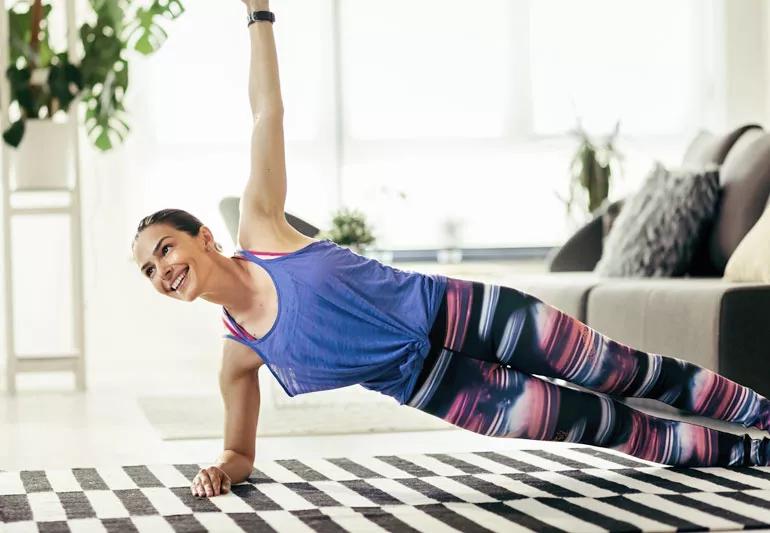
Image content: This image is available to view online.
View image online (https://assets.clevelandclinic.org/transform/5e1ba847-1046-4c31-bae5-419b31b01c6b/coreExercsSidePlank-1161289575-770x533-1_jpg)
A woman demonstrating a side plank.
If you suffer from back pain, you’ve probably heard that strengthening your core can bring you some relief. But is this always true? And if so, how do you do it? Physical therapist Patti Mariano Kopasakis, PT, DPT, SCS, answers common questions about what we should know about strengthening your core muscle group.
Advertisement
Cleveland Clinic is a non-profit academic medical center. Advertising on our site helps support our mission. We do not endorse non-Cleveland Clinic products or services. Policy
When most people think about the core of the body they think of the abdominal or six-pack area just below the ribs. While the abdominal muscles are an important part of the core, we consider other areas important, too.
Your core includes:
Your core also includes your diaphragm, muscles of the pelvic floor, hip flexors, and gluteal muscles.
Theoretically, if your muscles around the low back are weak, your body will rely more on passive structures for stability, including ligaments — the tissue that connects bone to bone — as well as the spinal bones or discs which lie between the spinal bones. This can cause pain.
But some studies have shown that specific core exercises are not any more beneficial than general exercise for low back pain. What we know is that exercise in general can help, and focusing on core muscles may provide some additional benefit.
Here are my top five:
Advertisement
For the plank exercises, start by holding them for 15 seconds to 30 seconds. For bird dog and scissors, try three sets of eight or 10 repetitions. For upward dog, do one set of 10 repetitions.
Any exercise performed incorrectly, whether it is core-strengthening or otherwise, has the potential to cause discomfort.
Twisting exercises or even incorrectly completing the exercises cited above can cause pain in the low back. But it’s highly unlikely that one repetition of an exercise will seriously harm your body, unless it’s an exercise using a very heavy weight.
The best way to keep your body safe is to listen to body cues such as pain during and immediately after an exercise, and the next day after exercising.
If any of the following is going on you should consult with your doctor:
Q: Where should you turn if you want help in creating a plan to address back pain?
Physical therapists train as musculoskeletal experts — they are the experts on muscles, bones and human movement. These professionals are the most qualified, aside from an orthopedic doctor, to assess back problems.
Since there are many factors that impact low back pain and many types of low back pain, it is a good idea to visit at least one time with a physical therapist for an evaluation and subsequent plan of care. This will give you an individually tailored plan with exercises that progress safely. The idea of core strengthening, while beneficial, is just one piece of the low back pain puzzle.
Advertisement

Sign up for our Health Essentials emails for expert guidance on nutrition, fitness, sleep, skin care and more.
Learn more about our editorial process.
Advertisement
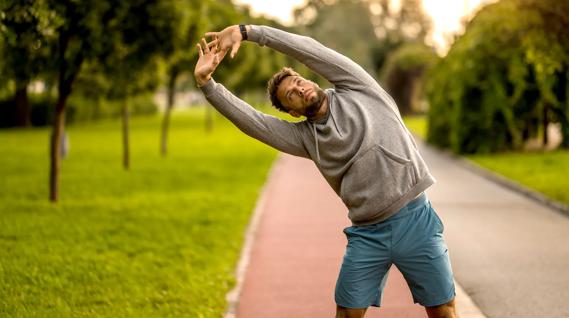
When your lower back hurts, stretching and staying active can be key to finding relief
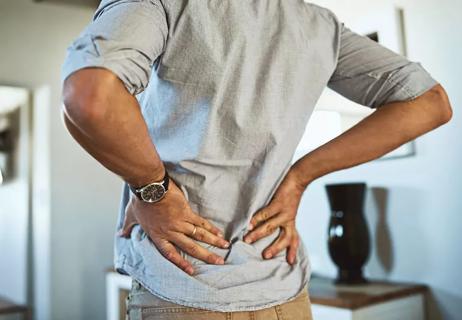
Manual therapy offers relief without the unwanted side effects of medication
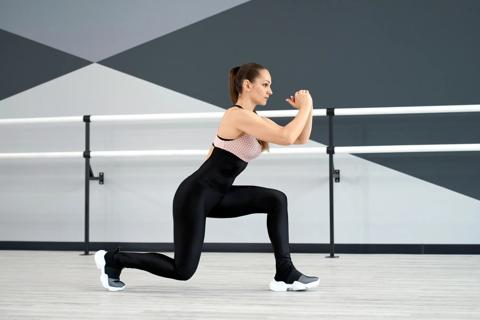
Functional fitness encourages real-life actions to help you move more easily, safely and confidently
These wearable devices can help you understand your body and stay active — but how you use them matters most
A higher VO2 max allows your body to better convert oxygen to energy to help fuel exercise and strengthen your heart and lungs
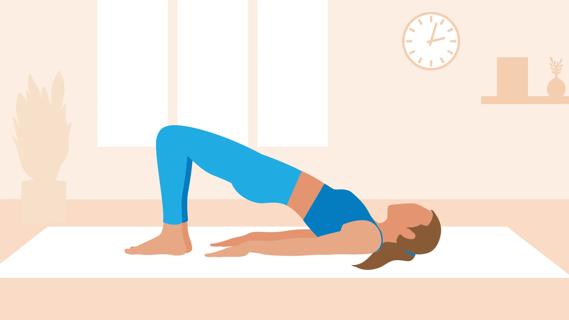
Clamshells, Pallof presses and Romanian deadlifts can help strengthen and build core muscles

Get a gait analysis and look for adequate cushioning and support before hitting the pavement

Jogging can improve your endurance, boost your mood and burn more calories than some other aerobic exercises

This ‘harm reduction’ approach to sobriety involves subbing one substance for another — a method that isn’t backed by research

Educate your child about body image, expectations and skin care first

A true chlorine allergy is extremely rare — it’s far more likely that you have a damaged skin barrier











