Locations:





Bad breath can smell foul, fruity, sour, fishy or even metallic — the scent may offer clues about what’s causing it
Bad breath happens to everyone here and there. But not every case of bad breath can be blamed on your onion and garlic bagel.
Advertisement
Cleveland Clinic is a non-profit academic medical center. Advertising on our site helps support our mission. We do not endorse non-Cleveland Clinic products or services. Policy
Persistent bad breath — known medically as chronic halitosis — can be a sign of something more serious happening in your mouth or other parts of your body.
“Bad breath isn’t always about what you eat or a matter of oral hygiene,” says dental hygienist Jasmine Girn, RDH.
So, what might your breath be trying to tell you? Let’s sniff out some possibilities.
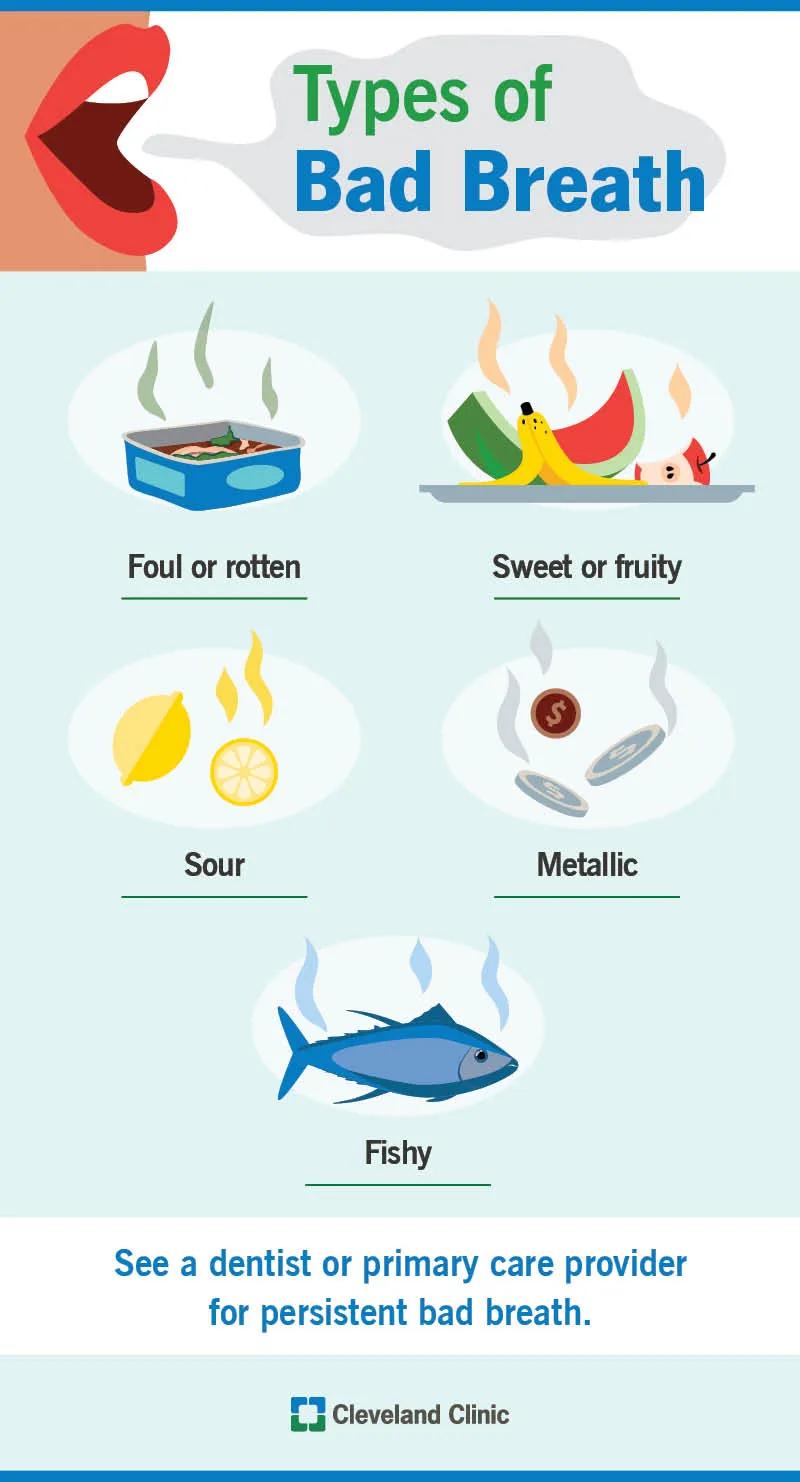
Image content: This image is available to view online.
View image online (https://assets.clevelandclinic.org/transform/70409fed-ef7c-4daf-9e0c-85c84ea4ef1e/bad-breath-smells)
Like the candle aisle in your favorite big-box store, bad breath comes in a surprising range of scents.
Problems with your teeth and gums are common culprits, but dry mouth, infections and other health conditions can also affect your breath.
Here’s what you may be smelling — and what could be behind it.
If your breath smells rotten or … well, like poop, start by looking at what’s happening in your mouth.
“When bacteria break down food particles around your teeth and gums, they can produce sulfur-like odors,” Girn explains.
Poor oral hygiene, gum disease and cavities can contribute to the smell. But if your brushing-and-flossing game is on point, it could be something else:
Advertisement
When your body can’t use glucose (sugar) for energy, it starts to break down fat instead. That process produces chemicals called ketones, which can give your breath a fruity or sweet smell. Some people call it “keto breath.”
Breath that smells strangely sweet deserves attention — especially if you have diabetes.
“For someone with diabetes, fruity breath can be a sign of diabetes-related ketoacidosis (DKA), a potentially life-threatening complication caused by low insulin,” Girn emphasizes.
But fruity breath doesn’t always point to diabetes. Your body can also produce ketones when you significantly limit carbohydrates in your diet, like when you’re following a keto diet or while fasting.
Got a sour taste in your mouth? Chances are, your breath smells that way, too. And GERD (chronic acid reflux) could be the cause.
“When you have acid reflux, stomach acid flows up into your esophagus and can sometimes reach your mouth,” Girn explains. “That backwash may leave behind an acidic taste and sour smell.”
And you may not always realize reflux is happening.
“Dental professionals can often spot signs of acid erosion on a person’s teeth before they even realize they’re dealing with reflux,” she adds.
Sour breath may also be a sign of dry mouth, a less-than-stellar oral hygiene routine and other causes. If it sticks around despite your best efforts at brushing and flossing, it’s worth mentioning to your dentist or healthcare provider.
“Metallic” is another common way to describe the aroma of bad breath, and there are a few different reasons it happens. Among them:
If the metallic smell sticks around and you don’t know why, don’t just cover it up with gum or mints. Talk with a healthcare provider to get to the underlying cause.
A rare metabolic condition called trimethylaminuria (TMAU) can give your breath a fishy odor. People with this condition may also find that their pee and sweat smell, too. That’s why you may hear this condition called “fish odor syndrome.”
TMAU keeps your body from properly breaking down trimethylamine, a strong-smelling chemical that’s produced when you digest certain foods, like fish, beans and eggs.
TMAU can be inherited, but certain health conditions and supplements can cause it, too. There’s no cure, but dietary changes and other treatments may help manage the odor.
Advertisement
The best way to freshen your breath depends on why it smells in the first place.
If the problem starts in your mouth, good oral hygiene can go a long way. If it comes from another health condition, treating that condition is key to improving your breath.
For everyday prevention:
And don’t expect mouthwash to solve everything.
“If you brush and floss properly and scrape your tongue, you probably don’t need it,” Girn says. Mouthwash simply masks odor, rather than fighting the source of the smell. It can also contribute to dry mouth, which can worsen your breath.
If bad breath sticks around despite good oral hygiene, start with a trip to the dentist. They can check for problems like gum disease, tooth decay or an abscess. If everything looks good from a dental standpoint, your primary care provider can investigate other possible causes.
Advertisement

Sign up for our Health Essentials emails for expert guidance on nutrition, fitness, sleep, skin care and more.
Learn more about our editorial process.
Advertisement

For fresher breath in the a.m., practice good oral hygiene, including flossing your teeth and scraping your tongue

These common mouth sores are very different — cold sores are caused by a virus and are contagious, but canker sores aren’t

This medicated liquid is available by prescription only and is specially formulated for your specific needs

Lots of things can activate the herpes simplex virus, from the common cold and cold weather to cracked skin and cosmetic procedures
This oral health practice doesn’t have proven benefits, and it’s not a substitute for brushing and flossing

Prescription oral antivirals are your best bet, but OTC creams can help, too

Stay hydrated, use a humidifier and try sugar-free candies or over-the-counter products with xylitol
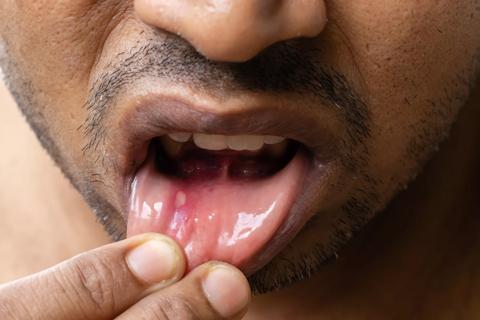
Non-cancerous ulcers usually heal within a few days or weeks — if it’s sticking around, it’s time to get it checked

Hormonal changes, a slower metabolism and muscle loss can make weight gain more common around menopause — healthy habits can help you manage it

Life-threatening complications include sepsis, stroke, pneumonia and more

Fruity-smelling breath can happen when your body burns fat for energy, and in some cases, can signal a medical emergency
 Search










