Locations:


This legume can reduce cholesterol and help with weight loss and healthy blood sugar levels
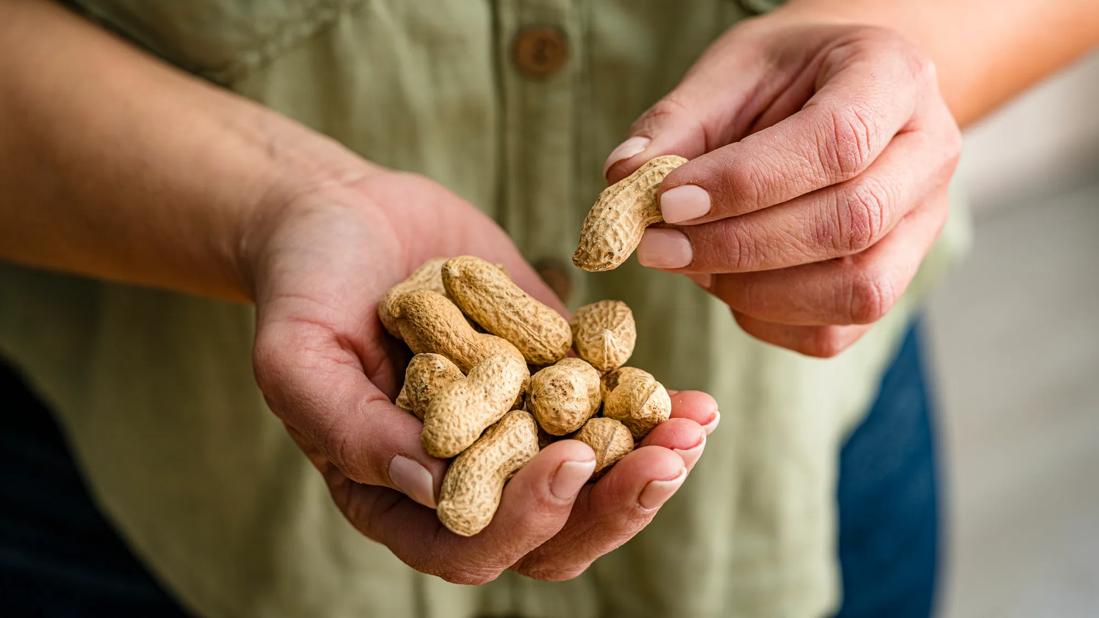
Image content: This image is available to view online.
View image online (https://assets.clevelandclinic.org/transform/97e4665d-0a6a-4860-9258-c82e2b1d60db/peanuts-1942033495)
Person holding handful of peanuts in shells
We tend to think of peanuts as nuts — it’s in the name, after all. But they’re actually legumes. They’re in the same family as chickpeas, lentils, peas and soybeans. But whatever we call them, peanuts are an abundant food. And for good reason.
Advertisement
Cleveland Clinic is a non-profit academic medical center. Advertising on our site helps support our mission. We do not endorse non-Cleveland Clinic products or services. Policy
“Peanuts are popular in many cuisines worldwide and in plant-based diets,” says registered dietitian Julia Zumpano, RD, LD. “They’re rich in healthy fats and protein, as well as several vitamins and minerals.”
Zumpano breaks down peanut health benefits.
An ounce (28 grams) of dry-roasted, without salt peanuts, which is about 28 shelled peanuts, provides:
An ounce of peanuts also provides these key nutrients:
Peanuts are a nutrient-dense food that offer some specific health benefits. Zumpano shares the top reasons why peanuts are good for you.
Antioxidants neutralize free radicals in your body. Free radicals are molecules that, in excess, can damage your cells in a process called oxidative stress. This damage plays a part in many disease processes and is thought to be what contributes to higher risk of chronic diseases.
Advertisement
“Antioxidants, like those found in peanuts, may help reduce the risk of a wide range of chronic diseases,” says Zumpano.
Peanuts are packed full of plant compounds and mineral antioxidants, including:
Eating peanuts and other nuts, like walnuts, almonds, cashews and pistachios, may help lower your cholesterol. The cholesterol-lowering property of peanuts may be due in part to their phytosterols.
“Phytosterols are compounds found in plants, and they’re similar in structure to cholesterol. When you eat phytosterols, they block the absorption of cholesterol in your digestive system, which can lower cholesterol levels,” explains Zumpano.
Even though peanuts are high in calories, research suggests that eating peanuts may help you maintain a healthy weight and avoid having obesity. “Peanuts also contain protein, fiber and healthy fats, which can make you feel full quicker and longer,” notes Zumpano.
Peanuts might even make weight loss more pleasant if you’re not a fan of low-fat diets, according to a study of people cutting calories to lose weight. Those who ate 1 ounce of peanuts before two meals each day lost around the same amount of weight as those on a low-fat diet.
Advertisement
All nuts help keep blood sugar steady, as they’re rich in fiber and protein and low in carbs. But what’s going on at a cellular level? A review of 40 different experiments found that eating peanuts and tree nuts may improve your insulin sensitivity. This means your body can use insulin more effectively.
But consuming peanuts isn’t likely to lower blood sugar directly. Rather, regularly eating peanuts is more likely to help prevent blood sugar problems in the long run.
“Normal blood sugar levels are a cornerstone to good health and lowering your risk of many chronic diseases,” says Zumpano.
Peanut butter is easily the most popular of all the nut butters. But is it healthy?
“In general, peanut butter has most of the same health benefits as peanuts,” reports Zumpano. “However, popular brands of peanut butter also contain added sugar and salt, which makes peanut butter less healthy than plain peanuts. To maximize the health effects, look for no-sugar, low-salt brands.”
Peanut allergies are common. This allergy response happens when your immune system mistakenly identifies the proteins in peanuts as harmful substances. These allergic reactions can be severe and even life-threatening for some people. Anyone with a peanut allergy should avoid peanuts, peanut butter and any foods that contain them.
Advertisement

Sign up for our Health Essentials emails for expert guidance on nutrition, fitness, sleep, skin care and more.
Learn more about our editorial process.
Advertisement
More research is needed to understand how this flavorful spice may help with lowering cholesterol, blood pressure and inflammation
Packed with antioxidants, this tiny fruit can help keep your teeth, heart and gut healthy
While there’s limited research, the horned melon contains nutrients that may help with your immune system and skin health
Small, but mighty, they’re nutritional powerhouses with loads of fiber and protein

This tropical fruit is a good source of fiber and vitamin C, but it can be unsafe for people with kidney problems
Products like turmeric, fish oil and probiotics blur the line between food and supplements
The root vegetable is a low-calorie food that may help with gut health

This East Asian and subtropical fruit is packed with delicious nutrition

This low-impact activity could boost your cardiorespiratory health

The advice dates to 1574, but it falls a little short given what we know today

Most tongue pain isn’t too serious, but seek help if it’s severe or lasts longer than a few weeks
 Search