Locations:


The root vegetable is a low-calorie food that may help with gut health
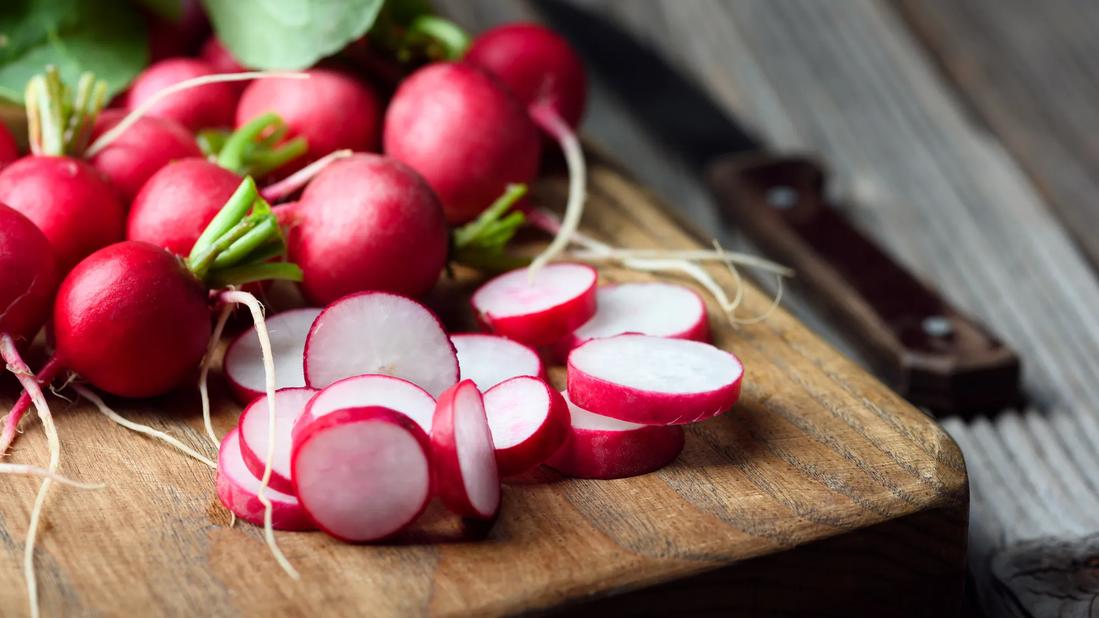
Image content: This image is available to view online.
View image online (https://assets.clevelandclinic.org/transform/13d2eeb0-61dc-4045-a971-631fa403cf93/radishes-2264430984)
Whole and sliced radishes on wooden cutting board
Most of us probably think of radishes as a garnish that adds a little decorative flair to our dinner plates (hello, radish roses!).
Advertisement
Cleveland Clinic is a non-profit academic medical center. Advertising on our site helps support our mission. We do not endorse non-Cleveland Clinic products or services. Policy
But the root vegetable can also shine on its own. It’s low in calories and contains fiber, vitamin C and other important nutrients.
Registered dietitian Kate Patton, RD, LD, explains what we know about radishes and how to incorporate them into your diet.
As one of the root vegetables from the Brassica family, radishes are cousins to other vegetables like broccoli, cabbage, kale, horseradish and turnips.
Radishes grow in the ground and come in different varieties and shades (think white, black, pink and purple).
“The most common type typically found in grocery stores is a red radish,” says Patton. “The small, round vegetable has a crunchy texture and a peppery taste. Another common variety is a daikon radish, which is popular in Asian cooking. It’s white and has a milder flavor.”
When it comes to its nutritional profile, radishes are low in calories. For example, a 1/2 cup of sliced raw radishes contains about:
Radishes also contain nutrients like:
“While most people eat the bulb of a radish, its leaves are edible and contain a lot of nutrients as well,” shares Patton.
Advertisement
Though the research around radishes is limited, they’re one of the many nutrient-rich foods you can eat. Patton offers a few ways the vegetable may benefit your health.
Making radishes a part of a well-balanced diet can be a good way to reach your daily fiber goals. Fiber helps move food through your digestive system and supports regular bowel movements.
“Fiber bulks up and softens your stool, so eating vegetables, like radishes, regularly may help prevent constipation,” says Patton.
Some of the nutrients found in radishes — like calcium, potassium and vitamin C — may help lower blood pressure.
“Calcium helps relax your blood vessels, while potassium helps your body remove excessive sodium,” explains Patton. “And vitamin C helps fight inflammation, which can lead to hypertension.”
Radishes are considered a low glycemic index food and may help prevent spikes in blood sugar (glucose) levels.
While that sounds promising, there isn’t enough research on radishes and their connection to blood sugar to fully understand their effects.
“If you have diabetes or another condition that affects your glucose levels, you should talk to your healthcare team about adding radishes while continuing to follow the eating plan they recommended,” advises Patton.
In general, eating a 1/2-cup serving of radishes a day is considered safe.
It’s rare to have an allergic reaction to the root vegetable, but it does happen. Symptoms may include:
These symptoms can be severe and possibly lead to anaphylaxis. Call 911 or go to the nearest emergency room.
Try using radishes in a few tasty ways:
“Enjoy radishes raw for a crunchy, zesty bite or cook them to mellow their peppery flavor,” says Patton.
While more research is needed to fully understand how radishes may benefit your health, we know they can serve as a nutritious, colorful complement to many recipes.
“If you’re looking for another veggie option to include in your diet, try adding radishes,” encourages Patton. “It’s a healthy choice that’s not only low in calories, but also full of nutrients.”
Advertisement

Sign up for our Health Essentials emails for expert guidance on nutrition, fitness, sleep, skin care and more.
Learn more about our editorial process.
Advertisement
This East Asian and subtropical fruit is packed with delicious nutrition

Lean meats, fish, dairy and plant proteins can help you meet your protein needs without piling on saturated fat and sugar

This citrus fruit delivers vitamin C, fiber and other nutrients that can support your heart, immune system and skin

Protein is essential in your diet, but piling more onto your plate isn’t always better

Both are healthy choices, but wild-caught salmon offers a few more benefits

This vibrant purple yam offers vitamin C, fiber and antioxidants in every bite
These bright berries are packed with nutrients and antioxidants that may support your eyes, immune system and overall well-being

The general rule is 1.2 to 1.6 grams of protein per kilogram of body weight — but that may not be exactly right for you

This simple practice can help you notice what’s meaningful, comforting or going well

Maca root supplements claim benefits like sexual health, menopause symptom relief and more energy — but human research is limited

It can take a few months — and you’ll need to put down the tweezers to give your brows time to recover
 Search