Locations:


This tropical fruit is a good source of fiber and vitamin C, but it can be unsafe for people with kidney problems
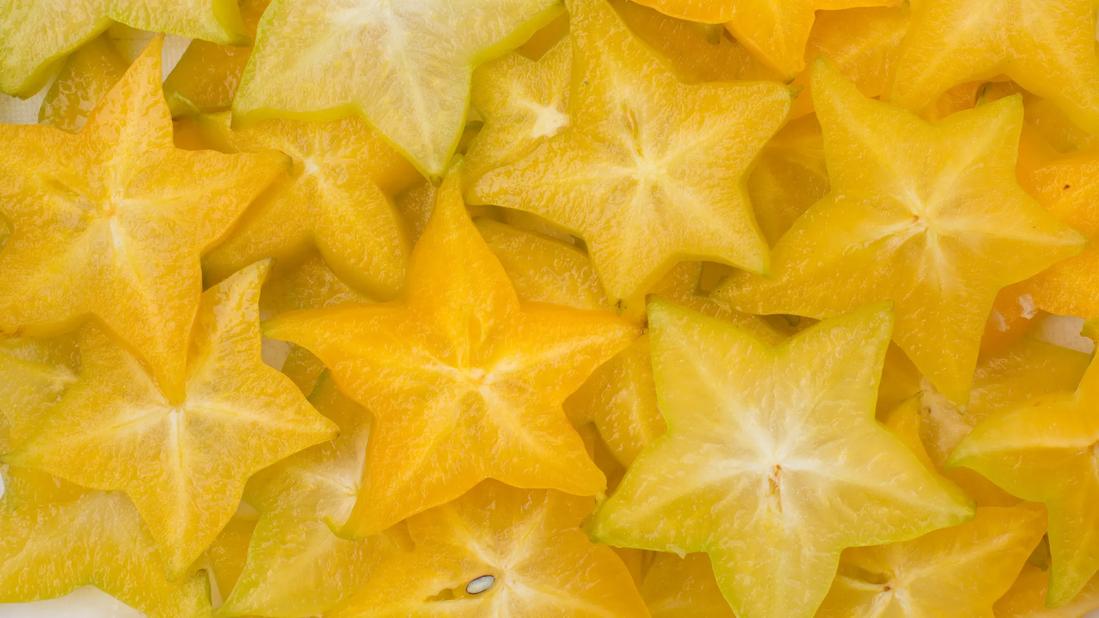
Image content: This image is available to view online.
View image online (https://assets.clevelandclinic.org/transform/d97289b1-2600-48ca-a2d6-0a389844387f/star-fruit-930431886)
Yellow pieces of star-shaped starfruit
Cut a starfruit crosswise, and you get exactly what its name promises: perfect little stars.
Advertisement
Cleveland Clinic is a non-profit academic medical center. Advertising on our site helps support our mission. We do not endorse non-Cleveland Clinic products or services. Policy
And there’s more to starfruit than just its good looks. This tropical fruit (also called carambola) is low in calories and contains fiber, vitamin C and other nutrients. But if you have kidney disease, proceed with caution.
Registered dietitian Beth Czerwony, RD, LD, explains the possible health benefits of starfruit, the best way to eat it and when you may need to avoid it.
Starfruit is an oblong tropical fruit that gets its name from its distinct shape.
Starfruit’s exterior ranges from green to yellow-orange. The juicy inside has a sweet-and-tart taste that’s comparable to a mix of pear, grape and orange.
So, how do you eat a starfruit? Luckily, it’s pretty easy. Since the flesh is edible, you don’t need to peel it. You can eat the seeds, too, although most people remove them.
Nutritionally, starfruit packs a punch.
One cup of cubed starfruit contains about:
Starfruit also provides the following nutrients:
The research around starfruit’s health effects is limited. It shouldn’t be viewed as a treatment or miracle cure for any health condition.
Advertisement
Your best bet? Think of starfruit as one of the many nutrient-rich foods you can eat. Its nutritional profile may offer some perks:
Starfruit contains vitamin C, a vital nutrient for your immune system health.
Vitamin C is also an antioxidant. Antioxidants help protect your body from the damage that free radicals can cause.
“Eating starfruit won’t stop you from catching a cold,” says Czerwony. “But getting enough vitamin C helps your immune system work at its best.”
Vitamin C helps in two ways when it comes to your skin.
First, your body uses vitamin C to make collagen, a protein that supports your skin’s structure. Secondly, its antioxidant properties help protect your cells from damage.
While starfruit isn’t going to stop the aging process on its own (sorry!), the vitamin C found in the fruit gives your body what it needs to maintain healthy skin.
One cup of starfruit contains about 3.7 grams of fiber.
Fiber helps move food through your digestive system and supports regular bowel movements. Fiber-rich fruits like starfruit can be a gut-friendly addition to your meals.
“The fiber in starfruit can act as a beneficial fuel for the bacteria in your colon,” shares Czerwony. “We know a healthy gut micobiome is associated with better digestion, immune function and production of short-chain fatty acids that support intestinal health.”
Research shows that starfruit may have positive effects on your cholesterol. But studies are limited, so it’s too soon to know for sure if eating starfruit can lower your cholesterol.
“If you have high cholesterol, starfruit may be a part of your heart-healthy eating plan. But it’s not a replacement for medications or other treatments your healthcare provider recommends,” stresses Czerwony.
Chronic inflammation is connected to diseases like heart disease and diabetes, among others.
Starfruit contains plant compounds with antioxidant properties, and early research shows it may have anti-inflammatory effects.
“While that may sound encouraging, more human research is needed to understand whether starfruit has a meaningful effect on inflammation,” says Czerwony.
There’s an important warning when it comes to starfruit: If you have kidney problems, don’t eat it unless your healthcare provider says it’s safe.
Starfruit contains oxalic acid and a neurotoxin called caramboxin. Healthy kidneys can remove the toxin from your body. But when your kidneys aren’t functioning properly, the amount of caramboxin can increase and cause issues in your brain and nervous system.
In severe cases, starfruit toxicity can lead to seizures and even be fatal. You should avoid starfruit if you have:
Advertisement
Starfruit can also interact with certain medications — including some cancer drugs — by changing how your body breaks them down. If you take any medications, talk with your healthcare provider before eating starfruit.
You can use starfruit in a variety of ways. Try it:
To prepare starfruit, wash it and then cut it crosswise. Remove the seeds if you want, and it’s ready to eat.
While starfruit may look like a star, nutrition-wise it doesn’t need top billing. With its sweet-tart flavor, you can work starfruit into both sweet and savory recipes.
“If it’s safe for you to eat, enjoy starfruit as one more colorful way to add fiber and nutrients to your diet,” concludes Czerwony.
Advertisement

Sign up for our Health Essentials emails for expert guidance on nutrition, fitness, sleep, skin care and more.
Learn more about our editorial process.
Advertisement

Products like turmeric, fish oil and probiotics blur the line between food and supplements
The root vegetable is a low-calorie food that may help with gut health
This East Asian and subtropical fruit is packed with delicious nutrition

Lean meats, fish, dairy and plant proteins can help you meet your protein needs without piling on saturated fat and sugar
This citrus fruit delivers vitamin C, fiber and other nutrients that can support your heart, immune system and skin
Protein is essential in your diet, but piling more onto your plate isn’t always better

Both are healthy choices, but wild-caught salmon offers a few more benefits

This vibrant purple yam offers vitamin C, fiber and antioxidants in every bite

Research hints at improved strength, balance, blood flow and weight loss, but more evidence is needed

The blended oat beverage may help curb hunger, but it doesn’t work like a GLP-1

Teen cycles are often ‘off-cycle’ for the first few years
 Search