Locations:





Early-stage breast cancer often responds well to treatment, but recurrence is still a risk
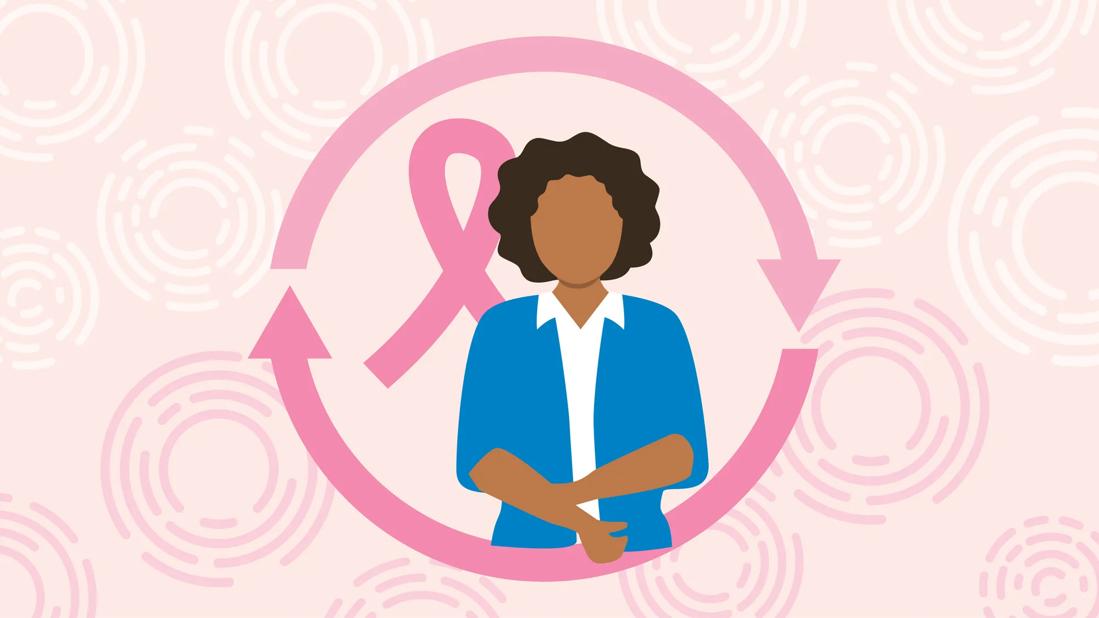
Image content: This image is available to view online.
View image online (https://assets.clevelandclinic.org/transform/910cdd89-256c-4382-b74a-61c5357e1bb7/breast-cancer-reoccurance-2180859357)
Person standing with breast cancer ribbon in background, with reoccurring circular arrows around them
If you’ve been treated for early breast cancer, you may feel relief — and lingering worry. One of the most common questions after treatment is about the risk of breast cancer recurrence. In other words: What are the chances the cancer could come back?
Advertisement
Cleveland Clinic is a non-profit academic medical center. Advertising on our site helps support our mission. We do not endorse non-Cleveland Clinic products or services. Policy
The answer depends on many factors, says breast surgical oncologist Margaret E.G. Thompson, MD.
Dr. Thompson explains what you need to know about breast cancer recurrence rates and risks.
Breast cancer recurrence is when cancer returns after treatment. It can happen months or even years down the road.
“A recurrence doesn’t mean treatment failed,” Dr. Thompson clarifies. “Cancer cells can sometimes survive initial treatment at levels too small to detect. Over time, those cells may grow again.”
There are three main types of breast cancer recurrence:
“Recurrence is always a risk. But some good news is that across the board, recurrence rates are going down,” Dr. Thompson reports. “In the last two decades, we’ve seen a massive decrease in local and regional recurrences and even in distant metastases, thanks to ongoing research and therapies.”
Advertisement
The type of recurrence affects your treatment options and overall outlook.
There isn’t one single breast cancer recurrence rate that applies to everyone. Your individual breast cancer recurrence chances depend on several factors, including:
“In general, early-stage breast cancer has a lower risk of recurrence than later-stage disease,” Dr. Thompson says. “But even early breast cancer can come back, which is one of the reasons follow-up care is so important.”
A few factors play a role in your individual risk of breast cancer recurrence.
Breast cancer generally has a lower rate of recurrence if it’s found and treated in the earlier stages and hasn’t spread to your lymph nodes. But if cancer is found in nearby lymph nodes, the risk of recurrence is higher.
“This is because the cancer cells have already shown they can travel beyond the original tumor,” Dr. Thompson explains.
No two tumors are the same — and the details matter. Based on their biology, different types of tumors tend to have different recurrence patterns. For example:
Your care team will use these tumor details to help guide their decisions about treatments that can help lower the risk of recurrence.
The kind of treatment you receive plays a major role in the likelihood of breast cancer recurrence. Treatment may include:
Each of these treatments lowers the chance that microscopic cancer cells remain in your body.
“There are certain radiation strategies, like intraoperative radiation therapy in some patients, that have been associated with higher recurrence rates,” Dr. Thompson notes. “Your treatment plan and decisions will all be personalized to your needs, and your team will carefully weigh all of the potential benefits and risks.”
Finishing the full course of recommended treatment — including long-term hormone therapy, if it’s prescribed to you — can significantly lower your risk of recurrence.
Advertisement
“Staying on your therapy is an important part of reducing recurrence risk,” Dr. Thompson emphasizes. “So, if the side effects of a certain treatment make it hard for you to tolerate it, be sure to talk about that with your care team. Adjustments are often possible.”
You can’t totally eliminate the risk of recurrence. But there are steps you can take that may help lower your risk.
If you have questions about your individual risk of recurrence, talk to your healthcare provider. They can explain how your specific diagnosis and treatment plan affect your risk — and what other steps you may be able to take to reduce it.
Advertisement
Even when your prognosis is good, living with the possibility of recurrence can feel heavy.
But focusing on what you can control — like attending appointments, taking your prescribed medications and supporting your overall health — can help shift the focus from fear to action.
“It’s normal to worry about your breast cancer recurrence rate, especially around follow-up scans or anniversaries of your diagnosis,” Dr. Thompson empathizes. “Over time, though, many people find that these fears become more manageable.”
Advertisement

Sign up for our Health Essentials emails for expert guidance on nutrition, fitness, sleep, skin care and more.
Learn more about our editorial process.
Advertisement

Managing your weight through physical activity may lower your chances of getting this common cancer

Not all breast lumps signal cancer, and not all breast cancer causes lumps — it’s important to know the facts
If you’re of Ashkenazi Jewish descent, these tests may be a reasonable starting point — but more thorough genetic testing can go much deeper

Breast cancer treatments can lower estrogen, which has a ripple effect on your bones

Breast cancer treatments can lower your fertility, but egg freezing and other preservation measures may be an option
Practical help and honest conversations can make a meaningful difference
Your path lab report contains detailed information about your tumor — your care team can work with you to turn it into a care plan
Doctors look at stage, biology, genetic risk and more to recommend your treatment plan
Managing your weight through physical activity may lower your chances of getting this common cancer

It typically starts in October and winds down in early spring, with cases at their highest in the middle of winter

Anxiety disorders, health conditions and past trauma can make driving nerve-wracking — help is available
 Search










