Locations:





Breast cancer and its treatments can affect your heart, but your care team works closely with you to monitor risk and protect you during and after therapy

Image content: This image is available to view online.
View image online (https://assets.clevelandclinic.org/transform/bd8d42ee-2609-4435-9445-631ca2b95edd/cancer-patient-doctor-talk-office-2149681133-r)
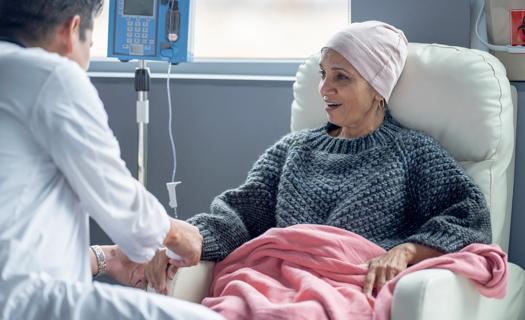
Patient wearing head scarf for cancer talking with healthcare provider
Learning that you have breast cancer is stressful enough. And when you hear that breast cancer can also affect your heart health, it can just feel like one more worry to add to your plate.
Advertisement
Cleveland Clinic is a non-profit academic medical center. Advertising on our site helps support our mission. We do not endorse non-Cleveland Clinic products or services. Policy
Women already face a higher risk for heart disease than many people may realize, and breast cancer can further raise that risk. But thanks to major advances in screening and treatment, more people are surviving breast cancer than ever before — which means protecting your heart for the long haul becomes an important part of both treatment and survivorship.
Of course, when you’re focused on treating cancer, thinking about your future heart health may not feel like your top priority. That’s understandable. But it’s an important part of your overall well-being, and one that your care team keeps top of mind.
“We’re getting very good at effectively treating breast cancer,” says medical oncologist Erin Roesch, MD. “So, we need to be mindful of these other very important aspects of your well-being.”
We talked to Dr. Roesch about how breast cancer affects your heart and how you can minimize the toll.
Heart disease is the No. 1 cause of death in women. And women with a history of breast cancer may be more likely to face future heart troubles than they are to have a cancer recurrence.
In other words, your heart health is of utmost importance for your future well-being.
There are a few reasons for that. Some breast cancer treatments may temporarily change how your heart works. Others may raise certain heart disease risk factors, like your blood pressure or cholesterol, over time.
Advertisement
And while it’s understandably scary to consider these effects, you’re not alone.
“Your care team will take your risk into account from the start,” Dr. Roesch emphasizes. “They’ll work with you to make decisions that weigh the benefits for your cancer care against the effects of that care on your heart.”
Here are a few ways that breast cancer treatments can affect your heart health.
If you’ve had radiation on your chest as part of your breast cancer treatment, it can affect your heart, especially if you receive high doses. That risk can be higher if you have certain cardiovascular risk factors to start with.
Dr. Roesch stresses that radiation is a critical part of treatment for a lot of women with breast cancer and that your overall health will be taken into account when planning radiation.
“Radiation oncologists are very good at discussing these risks,” she says. “Techniques have been developed to help minimize cardiac risk for our patients.”
Chemotherapy can also put strain on your heart.
Some chemotherapy drugs, including a class called anthracyclines, can lead to cardiomyopathy, a condition that can weaken your heart muscle over time. The risk rises with higher doses — though the amount typically administered for treating breast cancer is typically well below those levels.
Still, these risks matter when designing a treatment plan. “It’s something we take into account, especially for patients with other cardiovascular risk factors,” Dr. Roesch says. “We always weigh the risks and benefits of using anthracyclines.”
There are certain treatments for people with HER2-positive breast cancers that can also affect your heart.
HER2-targeted therapies like trastuzumab (Herceptin®) and pertuzumab (Perjeta®) can lower your heart’s ejection fraction. That’s a measure of how well your heart pumps blood and a key measure of your heart health. When it happens, it’s usually temporary.
“These changes are generally reversible if they occur,” Dr. Roesch explains. If you receive these treatments, your provider will recommend regular echocardiograms to monitor your heart function.
Hormone therapies are an important treatment for most hormone receptor–positive (HR+) breast cancers.
They can affect heart health in different ways depending on the type of medication you receive:
Advertisement
“It’s important for people on these therapies long term to be connected with a primary care doctor,” Dr. Roesch says. “They, along with your oncologist, help monitor these important health parameters and others.”
Breast cancer treatments can trigger early menopause or menopause-like symptoms. That means your estrogen levels can drop significantly, leading to menopause symptoms and infertility. That change can also affect your cholesterol, blood vessels and overall heart health.
“For patients who receive ovarian suppression, menopause can have a clear impact on cardiovascular health,” Dr. Roesch notes. “It’s another reason why multidisciplinary care matters.”
Your care team works behind the scenes to balance managing your cancer with protecting your heart. That includes tailoring treatments to your personal risk factors and encouraging you to keep up with a primary care provider to monitor changes to your health. You may also benefit from seeing a cardiologist or cardio-oncologist to manage any heart issues.
This team approach helps guide decisions and monitor your heart safely.
“Our goal is always to treat the cancer effectively while also protecting the rest of your health,” Dr. Roesch says. “Your team should work together to think about your heart from the very beginning and monitor it closely along the way.”
Advertisement
There’s also a lot you can do to support your heart during treatment and beyond. Dr. Roesch shares this advice:
Breast cancer and heart health are closely connected, but your care team works proactively to reduce risk at every step. With routine monitoring, regular communication and healthy habits, you can protect your heart while staying focused on your cancer care and long-term well-being.
Advertisement

Sign up for our Health Essentials emails for expert guidance on nutrition, fitness, sleep, skin care and more.
Learn more about our editorial process.
Advertisement

Managing your weight through physical activity may lower your chances of getting this common cancer

Not all breast lumps signal cancer, and not all breast cancer causes lumps — it’s important to know the facts
If you’re of Ashkenazi Jewish descent, these tests may be a reasonable starting point — but more thorough genetic testing can go much deeper

Breast cancer treatments can lower estrogen, which has a ripple effect on your bones

Breast cancer treatments can lower your fertility, but egg freezing and other preservation measures may be an option

Practical help and honest conversations can make a meaningful difference
Your path lab report contains detailed information about your tumor — your care team can work with you to turn it into a care plan
Doctors look at stage, biology, genetic risk and more to recommend your treatment plan
Managing your weight through physical activity may lower your chances of getting this common cancer

It typically starts in October and winds down in early spring, with cases at their highest in the middle of winter

Anxiety disorders, health conditions and past trauma can make driving nerve-wracking — help is available
 Search










