Locations:
Search IconSearch

Sore Throat? Common Cold? Don’t Treat Them With Essential Oils

The safety risks outweigh any potential benefits these products may offer
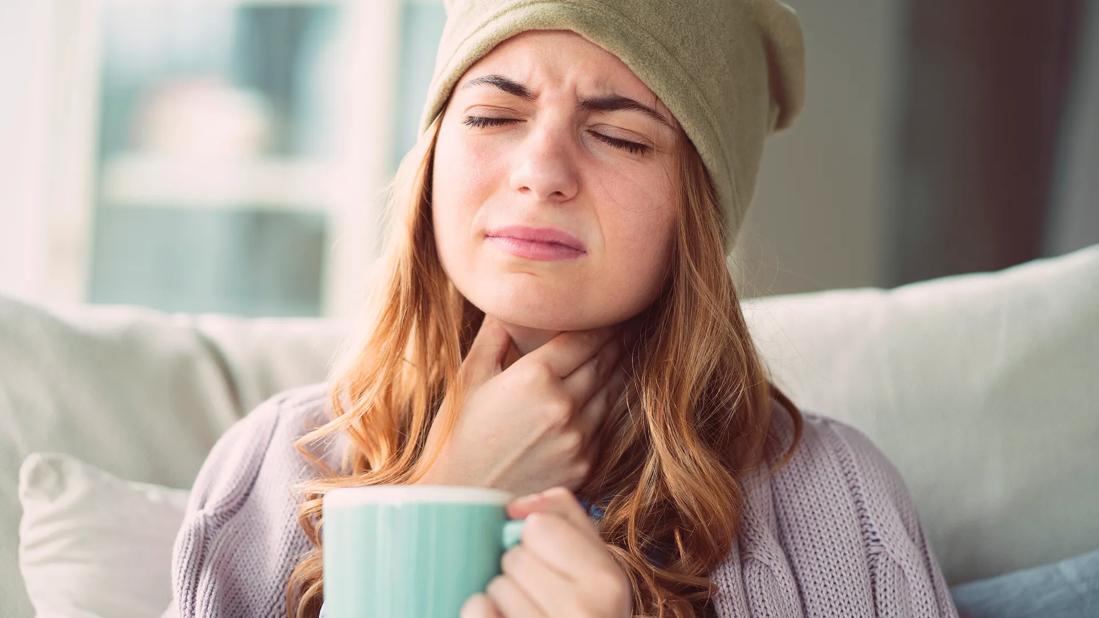
Person wincing as they hold their sore throat and a hot beverage

It’s happening again — that telltale tickle in your throat. It could be allergies, a cold or even strep. All you know is you want it gone, preferably without the side effects of over-the-counter cold meds.

Advertisement

Cleveland Clinic is a non-profit academic medical center. Advertising on our site helps support our mission. We do not endorse non-Cleveland Clinic products or services. Policy

There are plenty of home remedies worth trying, but essential oils don’t make the list.

Integrative medicine specialist Melissa Young, MD, explains why she doesn’t recommend essential oils for sore throat and cold symptoms and what to try instead.

Are essential oils recommended for a sore throat?

Despite a few promising studies, there’s not enough evidence to support using essential oils for colds or sore throats.

You may have read that it helps to rub oregano oil on your chest, inhale steam with peppermint oil, diffuse lavender oil and more. But the research we do have often shows that — while comforting — these approaches don’t treat the actual illness or its symptoms.

Essential oils can also cause side effects, some of which are serious.

“Until there’s better research available, they aren’t worth the risk in most cases, for most people,” Dr. Young states.

Potential risks

Even if essential oils were proven to be safe and effective for sore throats or cold symptoms, they pose other risks that may make them a bad choice.

Reasons to avoid them include:

  • Allergic reactions: Essential oils can sometimes trigger cross-reactions. For example, people with ragweed allergies run a higher risk of reacting to chamomile essential oil because the plants are related.
  • Airway irritation: Essential oils emit volatile organic compounds (VOCs), which may irritate your respiratory tract and make cold symptoms worse. They may also worsen lung or breathing issues, like asthma or COPD.
  • Danger to young children and pets: Essential oils like birch and wintergreen contain methyl salicylate, which can be deadly to children under age 2. And many essential oils — like tea tree, peppermint and eucalyptus — are toxic to pets.
  • Hormone disruption in teens: Research suggests some essential oils may cause hormonal changes in teenagers. Check with a pediatrician before using them.
  • Medication interactions: Talk to your healthcare provider or pharmacist before using essential oils alongside other over-the-counter (OTC) or prescription drugs.
  • Photosensitivity: Certain essential oils can make you more sensitive to sunlight.
  • Poisoning and organ damage: “Never consume essential oils for any reason,” Dr. Young urges. “Some can be deadly if swallowed and others can do serious harm.”
  • Pregnancy and breastfeeding complications: Certain essential oils may not be safe to use during pregnancy or while breastfeeding. Talk to your obstetrician or midwife before using them.
  • Skin irritation: Applying essential oils to your skin can cause contact dermatitis. And as a rash can be a sign of illnesses like strep throat and scarlet fever, adding a product that may also cause skin symptoms can make it harder to pinpoint a cause.

Advertisement

And keep in mind: Essential oils aren’t regulated by the U.S. Food and Drug Administration (FDA). You can’t be sure the ingredients are pure, that they’re properly diluted, or that they meet basic quality or safety standards, Dr. Young says.

Alternatives to essential oils for sore throat

Essential oils aren’t a good choice for cold and sore throat relief, but there are lots of other natural remedies that can help.

Dr. Young suggests trying:

  • Nasal irrigation: Used correctly, a neti pot can be a great tool for combatting cold-related nasal congestion.
  • Saline gargle: Gargling with warm or room temperature saltwater can temporarily reduce throat swelling and soothe irritation.
  • Warm tea with honey: Warm tea can calm a sore throat and loosen mucus, while honey coats the throat to relieve pain and make swallowing easier.
  • Elderberry products: Studies on elderberry for cold relief have mixed results. Still, some people find it helpful, and it’s generally safe for most adults to try. Check with your provider to make sure it’s a safe choice for you.
  • Lozenges or hard candies: Sucking on lozenges and hard candies ups your saliva production, easing irritation from a sore throat. Just keep in mind that they’re a choking hazard for young kids and people with swallowing disorders.
  • Throat sprays: Throat sprays can numb and coat your throat, bringing temporary pain relief. Read the product instructions and use the spray as directed.
  • Vitamin C: Research suggests that vitamin C may slightly reduce the severity and length of a cold. It’s no silver bullet, but it’s generally safe for most adults. Just avoid taking more than 2,000 milligrams a day unless your provider tells you to.
  • Steam therapy: Inhaling steam can loosen congestion and soothe dry or inflamed tissues in your nose and throat, making breathing and swallowing easier. To prevent burning yourself, breathe small amounts at a safe distance and work your way up.
  • Water: Drinking water can help keep your throat moist and thin out nasal congestion.

If natural remedies aren’t getting the job done, consider using OTC medications. Options include acetaminophen or ibuprofen for pain and fever and OTC cold meds for congestion, cough and sinus pressure.

“Over-the-counter decongestants can increase blood pressure, so check with your doctor before taking them if you have hypertension or take medication for high blood pressure,” Dr. Young advises.

When to see a doctor

If home remedies and over-the-counter medications aren’t making a dent in your sore throat and other cold symptoms, reach out to a healthcare provider. They’ll need to test you for strep throat.

“There’s no evidence that essential oils can treat strep throat,” Dr. Young stresses. “It must be treated with an antibiotic because it can have very serious consequences.”

Without treatment, strep can lead to:

  • Scarlet fever
  • Rheumatic fever (this is less common)
  • An abscess on or around your tonsils
  • Sinus and ear infections
  • Reactive arthritis and kidney complications (rarely)

You should also call a healthcare provider if you have:

  • A fever that’s over 100.4 degrees Fahrenheit (38 degrees Celsius) or lasts more than three days
  • Trouble swallowing or breathing
  • Chest pain or wheezing
  • A cough that doesn’t go away
  • Ear pain or drainage
  • Severe sinus pain
  • A rash that’s reddish or purplish, painful or spreading
  • Swelling around your neck or throat

Advertisement

“If you only have mild symptoms and you want to try natural remedies first, that’s fine. But if you’re not getting better or you have concerning symptoms, you really need to see a provider,” Dr. Young stresses.

Advertisement

Cleveland Clinic icon
Health Essentials logo
Subscription icon

Better health starts here

Sign up for our Health Essentials emails for expert guidance on nutrition, fitness, sleep, skin care and more.

Learn more about our editorial process.

Related Articles

Person checking their health stats on their smartwatch, with checked off health goals, biohacking
June 17, 2026/Wellness

What To Know About Biohacking and How To Try It Safely

Practices range from simple lifestyle changes to extreme experiments — and not all approaches come with the same level of risk

Person sitting in an ice bath outside
May 8, 2026/Orthopaedics

Are ‘Cold Plunge’ Ice Baths Good for You?

Cold-water immersion offers benefits like sore muscle relief, but the therapy comes with risks, too

Person checking their fitness tracker on their phone and smartwatch
April 8, 2026/Exercise & Fitness

What Are Fitness Trackers? And Do You Really Need One?

These wearable devices can help you understand your body and stay active — but how you use them matters most

Person seated, receiving IV vitamin therapy, with healthcare provider monitoring
March 9, 2026/Wellness

IV Vitamin Therapy: Does It Work?

The process delivers nutrients quickly and efficiently, but research is limited on many claimed benefits

The seven chakras
September 26, 2025/Wellness

The 7 Chakras: What They Mean and How To Use Them for Health and Wellness

Different types of yoga poses, meditation and breathwork may help you feel more emotionally balanced

Person squeezing drops of a tincture into their mug
September 3, 2025/Wellness

What Is Homeopathy?

There’s very little scientific evidence that this alternative medicine practice works

Feet in a tub of ionizing water
August 14, 2025/Wellness

Do Foot Detoxes Actually Work?

Spoiler alert: Science doesn’t back the numerous health claims

Person wearing headphones doing qigong outside
June 13, 2025/Mental Health

An Introduction to Qigong

This traditional Chinese medicine practice may boost mental health, immune function, balance and more

Trending Topics

Plate of chicken, broccoli and a baked sweet potato

Foods To Eat (and Limit) on a Diabetes Diet

Fill your plate with lean proteins, non-starchy vegetables and complex carbohydrates

Skin with red dots and bumps

‘Chicken Skin’: How To Get Rid of Bumps on Your Arms

With time and patience and trial and error, you may be able to find relief from keratosis pilaris (KP) symptoms

Child lying down asleep, with thumb in their mouth

How (and Why) To Help Your Child Stop Sucking Their Thumb

Thumb sucking is a normal part of early development, but over time, it can affect teeth, speech and habits

Ad