Locations:





Stress, dental work and repetitive motions are just a few of the many HAE triggers
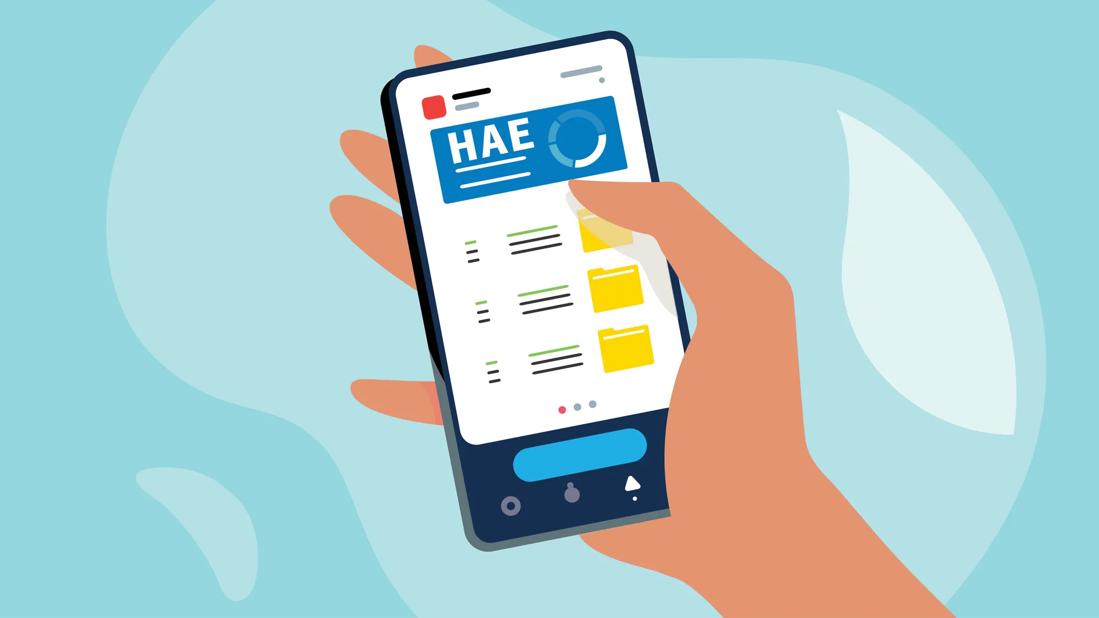
Image content: This image is available to view online.
View image online (https://assets.clevelandclinic.org/transform/2152c5e4-1d2a-424e-9dd2-d57188b9e9d2/hand-holding-smartphone-1097208526)
Hand holding smartphone displaying HAE app
Living with hereditary angioedema (HAE) means living with a worry in the back of your head: Is today the day I have an attack?
Advertisement
Cleveland Clinic is a non-profit academic medical center. Advertising on our site helps support our mission. We do not endorse non-Cleveland Clinic products or services. Policy
This rare, genetic condition means you’re either missing a type of protein called a C1-inhibitor or it’s not functioning properly. Without it, certain triggers can push your immune system into overdrive. The result? A sudden flood of inflammation that’s concentrated in one or more parts of your body, like your hands, face or genitals. If that swelling happens in certain areas, like your throat, it can be life-threatening.
Immunologist Jennifer Ohtola, MD, PhD, shares common HAE triggers, what you can do to reduce your risk of an attack and how to respond when they happen.
HAE attack triggers vary widely from person to person and can change without warning.
It’s important to keep in mind that HAE and allergies are two different things. And while they may look similar, you can’t treat an HAE attack and an anaphylactic reaction the same way. So, be sure to alert your care team if you have both conditions.
Here are some of the most common triggers.
A 2021 review of studies found that emotional stress is the most common spark for HAE attacks. When you go into fight-or-flight mode, your body responds by releasing stress hormones, like adrenaline and cortisol. In people with HAE, those hormones can cause a sudden surge of inflammation.
Advertisement
Dr. Ohtola describes it as a vicious cycle.
“HAE can be emotionally disabling because the attacks have the potential to be life-threatening,” she says. “Some live in fear of it happening again, to the point that they’re afraid to leave the house. The swelling that happens during an HAE attack can also cause embarrassment and self-consciousness.”
Working with a mental health provider is a great way to improve your stress management skills.
When your body is under physical stress, it releases the same stress hormones that trigger HAE attacks when you’re dealing with emotional stress.
“Some people with HAE notice that minor trauma, surgeries and infections can cause an attack,” Dr. Ohtola notes. “Dental work is a big one, too.”
And while getting plenty of exercise is important when you have HAE, research suggests it can also trigger attacks. Talk with your provider before starting a new exercise program. They can help you figure out what kinds of physical activity are safest for you.
Hormone changes are another common HAE attack trigger. Everybody’s hormones fluctuate over time. It’s part of getting older, and — for some people — having chronic health issues.
Hormone fluctuations happen monthly (or close to it) if you’re menstruating. Dr. Ohtola says that’s part of the reason HAE tends to be more severe in women. Ditto for anyone taking hormonal medications, like birth control, hormone replacement therapy (HRT) or certain cancer treatments.
When you put pressure on the same body part repeatedly — like you do when working with tools or doing certain types of exercise — it can trigger an HAE attack.
Any medication that causes severe side effects could potentially trigger an HAE attack, but there are also certain types of drugs that are known to cause HAE attacks, like:
While there’s no way to prevent an HAE attack, there are steps you can take to reduce your risk, like identifying and avoiding triggers and (if possible) taking maintenance medication.
If you’re new to symptom tracking, it can be hard to know what you need to keep records of. That’s why Dr. Ohtola suggests using one of the many free tracking apps, like:
While symptom tracking can help you notice trends and identify triggers, there are limits to how helpful it can be. New triggers can pop up at any time. And triggers like stress and illness are unavoidable.
“HAE attack triggers can be unpredictable. And what an attack looks like — where the swelling is and how far it progresses — can vary wildly from episode to episode,” she says.
Advertisement
That’s why it’s important to get established with an immunologist.
“Once you and your provider figure out a treatment plan, you can take medications to help prevent attacks,” Dr. Ohtola reassures. “They’ll also give you an on-demand medication in case you have an attack.”
If you’re having an HAE attack, you need to treat it as soon as possible. Dr. Ohtola shares what you need to do and when to protect yourself against complications.
As soon as you notice you’re having symptoms of an HAE attack, like nausea, abdominal pain, swelling, throat tightness or voice changes, take your on-demand medication. Don’t wait.
“You need to administer your rescue medication because you never know how bad the swelling is going to get,” Dr. Ohtola explains. “Your on-demand medicine should start working within a half hour or so.”
Most of these options are IV injectables, which can be hard to self-administer. Talk to your provider to find out which rescue meds are available to you and best fit your needs.
Any HAE attack that involves swelling of your throat or tongue is an emergency.
“Even if you use that on-demand treatment, you should still go to the emergency room to get evaluated,” Dr. Ohtola emphasizes. “Those kinds of attacks can be life-threatening. And if the medication we give you at the hospital doesn’t work well enough, we’ll have to support your airway with a breathing tube.”
Advertisement
Never try to drive during an HAE attack that’s affecting your ability to breathe or swallow. Call 911 or your local emergency service provider.
It’s hard to feel prepared for HAE attacks because they’re so random. But careful symptom and trigger tracking, close communication with your healthcare provider and a little advance planning can help reduce your risk of complications.
If HAE attack anxiety is interfering with your daily life, know that you’re not alone. Your allergist is here to help, as are support groups, organizations like the U.S. Hereditary Angioedema Association, and mental health providers. Asking for help can be hard, but it’s worth it.
Advertisement

Sign up for our Health Essentials emails for expert guidance on nutrition, fitness, sleep, skin care and more.
Learn more about our editorial process.
Advertisement

People with PKU need to avoid high-protein foods, like meat, dairy, legumes and whole grains

You’ll work with your provider to weigh the pros and cons of different medications

Moisturizing, running a humidifier and adjusting your shower routine may help keep itchiness and irritation at bay
With time and patience and trial and error, you may be able to find relief from keratosis pilaris (KP) symptoms

Consuming too much beta-carotene can temporarily discolor your skin
If you’re dealing with intense itching and red or swollen skin, it might be eczema
Genes, family history and anatomy can all influence obstructive sleep apnea — but lifestyle factors can, too

Avoid triggering flare-ups and inflammation by wearing sunscreen and other sun-protective clothing daily

Hormonal changes, a slower metabolism and muscle loss can make weight gain more common around menopause — healthy habits can help you manage it

Life-threatening complications include sepsis, stroke, pneumonia and more

Fruity-smelling breath can happen when your body burns fat for energy, and in some cases, can signal a medical emergency
 Search










