Locations:





 Search
Popular candy contains potassium-lowering compound
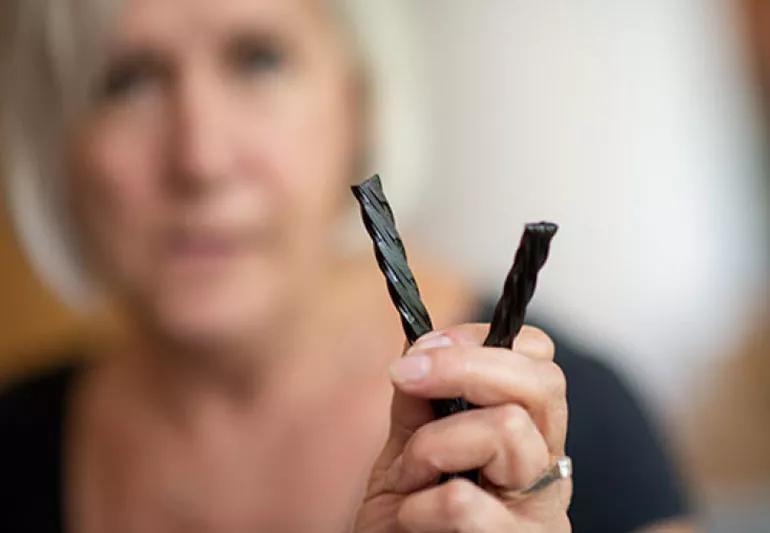
Image content: This image is available to view online.
View image online (https://assets.clevelandclinic.org/transform/90c77c0a-99c0-4670-bc64-3c37a99a1195/BlackLicorice_1872897_jpg)
black licorice heart issues helpful black licorice
Black licorice has been a fan favorite for generations. While this tasty treat is enjoyable for most people, for some, it can literally make their heart skip a beat.
Advertisement
Cleveland Clinic is a non-profit academic medical center. Advertising on our site helps support our mission. We do not endorse non-Cleveland Clinic products or services. Policy
Registered dietitian Katherine Patton, MEd, RD, CSSD, LD, says eating too much black licorice can make your heart skip a beat or two — or even more. Though it happens rarely, black licorice can cause an irregular heartbeat in some people and an excess may cause serious harm.
Black licorice contains a compound that comes from licorice root that can lower your potassium levels. Lower potassium levels can cause those abnormal heart arrhythmias.
The U.S. Food and Drug Administration experts blame glycyrrhizin, the sweetening compound derived from the licorice root. This compound can cause potassium levels in the body to decrease and when this happens, some people can experience abnormal heart rhythms.
Others, especially those over 40 with a history of heart disease and/or high blood pressure, may experience other potentially serious problems, including a rise in blood pressure, lethargy and even congestive heart failure.
“If you already have heart disease or high blood pressure, then be a little more aware of how you’re feeling if you eat this kind of licorice,” says Patton. “Stop eating it if you think you notice any type of irregular heartbeats.”
However, she notes that some foods that advertise themselves as “licorice” or “licorice flavor” use anise oil, not true black licorice. Those foods will not put you at risk for arrhythmias.
Advertisement
Also known as sweet root, licorice root has some benefits, too. It’s used primarily in a dietary supplement for bacterial and viral infections, digestive problems and menopausal symptoms. Be cautious because these supplements can raise blood pressure.
So how much is too much? The FDA says if you’re 40 or older, eating multiple 2-ounce bags of black licorice a day for at least two weeks is overdoing it and could land you in the hospital with arrhythmia or an irregular heart rhythm.
The FDA also reports that black licorice can interact negatively with certain medications, dietary supplements and herbs. It’s best to talk to your doctor to find out if anything you’re taking will interact negatively with the popular candy.
Patton says that while the phenomenon is rare, if you feel funny after eating black licorice and you’ve had heart trouble in the past, don’t hesitate to call your doctor. Other symptoms can include headache, lack of energy or body swelling.
“If you have any concern, I would definitely call your doctor’s office right away and let them know,” Patton says. “If it’s really severe, then I would go to the emergency room. It’s better to be safe than sorry.”
Advertisement

Sign up for our Health Essentials emails for expert guidance on nutrition, fitness, sleep, skin care and more.
Learn more about our editorial process.
Advertisement

These tasty little fruits can help fight inflammation, improve digestion and stabilize blood sugar

This legume is a good source of plant protein and fiber
The superfood is high in vitamin C and can help improve your digestion and boost your immune system

Pick bell peppers to help fight cancer, memory decline and joint pain

The tropical fruit is a good source of antioxidants and vitamin C

High amounts of cholesterol and saturated fat in red meat may be linked to heart disease

The leaves and pods from this tree are rich in essential nutrients
This starchy root vegetable is a staple in many global cuisines — but it has to be prepared correctly, or it can cause serious concerns

This ‘harm reduction’ approach to sobriety involves subbing one substance for another — a method that isn’t backed by research

Educate your child about body image, expectations and skin care first

A true chlorine allergy is extremely rare — it’s far more likely that you have a damaged skin barrier











