Locations:





 Search
Communicating clear limits helps protect your time, energy and emotional well-being

Image content: This image is available to view online.
View image online (https://assets.clevelandclinic.org/transform/b6175475-ad43-4f73-a862-acdd43d854d3/setting-boundaries-2134623388)
Person holding a giant pencil, drawing a boundary line between two cliffs
“Setting boundaries” is a buzzy term these days. But what does it actually mean to establish and enforce healthy boundaries? And if you’ve never intentionally done so before, where do you even begin?
Advertisement
Cleveland Clinic is a non-profit academic medical center. Advertising on our site helps support our mission. We do not endorse non-Cleveland Clinic products or services. Policy
Social worker Karen Salerno, MSSA, LISW-S, explains why boundaries are so important and how to make sure yours are understood by the people in your life.
Knowing your boundaries gives you clarity about what you’re comfortable with — and empowers you to be clear about it with other people.
“It’s important to set up healthy boundaries so people know how to best communicate and interact with you,” Salerno says.
There are lots of different types of boundaries. Here’s a look at some of them, with examples to help you get a feel for each.
Advertisement
Setting boundaries isn’t a one-step event — it’s a practice that starts with understanding yourself and your needs. Salerno explains how to set boundaries confidently and respectfully.
Before you can set a boundary, determine what feels right to you and what doesn’t.
“Boundaries start with self-awareness,” Salerno points out. “You have to know what you need in order to ask for it.”
It may help to spend some time examining your core values and beliefs. Ask yourself questions like: What makes me feel comfortable? What drains me? How much time, energy and attention can I reasonably give others?
Examples:
You might decide you want to:
Once you know what you need, it’s time to communicate it. And it’s important to be specific. Avoid hints or hoping the other person will “just know.”
Instead, use language that’s clear, firm and respectful to tell the other person exactly what behavior you’re comfortable with — and what you’re not. This helps them understand your boundary without guesswork.
Examples:
Talk about your needs from your own perspective. Using “I” statements keeps the focus on your needs rather than placing blame on the other person for their actions. This helps reduce defensiveness and keep conversations productive.
“Healthy boundaries don’t assert control over someone else,” Salerno clarifies. “They communicate your personal needs while acknowledging the needs of those around you.”
Here are some examples of what you might feel tempted to say versus how it can be reframed into an “I” statement.
| Instead of saying this | Try saying this |
|---|---|
| “Why can’t you ever stick to the plan?” | “I feel overwhelmed when plans change at the last minute.” |
| “I have enough to deal with right now. I can’t talk to you about all of your feelings.” | “I’m feeling emotionally depleted right now and don’t feel like I can be as supportive as you need me to be.” |
| “Your tendency to gossip is really toxic.” | “I’m uncomfortable being a part of conversations about people who aren’t here.” |
| Instead of saying this | |
| “Why can’t you ever stick to the plan?” | |
| Try saying this | |
| “I feel overwhelmed when plans change at the last minute.” | |
| “I have enough to deal with right now. I can’t talk to you about all of your feelings.” | |
| Try saying this | |
| “I’m feeling emotionally depleted right now and don’t feel like I can be as supportive as you need me to be.” | |
| “Your tendency to gossip is really toxic.” | |
| Try saying this | |
| “I’m uncomfortable being a part of conversations about people who aren’t here.” |
What will happen if your stated boundary isn’t respected? Communicate that when you’re communicating the boundary itself.
The word “consequences” may sound harsh — but they don’t have to be. They can be as simple as, “If texts come after 8 p.m., I won’t respond until the next morning.” But they may also mean ending a conversation, leaving a situation or limiting future interactions.
Advertisement
“Establishing consequences shows that you’re serious about protecting your well-being,” Salerno says.
Boundaries only work if you honor them. If someone crosses a boundary you’ve clearly set, the consequences kick into action.
Sometimes, this means providing gentle reminders. Let’s say, for example, a coworker repeatedly interrupts your focused work time, remind them, “I can talk during lunch, but right now I’m in work mode.”
Other times, those reminders don’t need to be so gentle, especially if you feel that someone is intentionally crossing your boundary or continues to needle you to try to change your position. In these cases, you can reinforce your boundary using simple but firm language, like, “I’ve already shared my answer, and it hasn’t changed.”
“You also want to make sure you follow through on your boundaries,” Salerno emphasizes. “If you’re not firm about them, it may make it harder for other people to trust your boundary setting in the future.”
The more consistently you apply your boundaries, the more others learn what you expect — and the easier it becomes to uphold them.
But it’s OK to be flexible, too.
“As your life changes, your relationships will change and evolve over time,” Salerno observes. “If you ever feel like something is off, it’s never too late to re-establish or modify old boundaries or to set new ones.”
Advertisement
Boundaries aren’t barriers — they’re tools that help you care for yourself and others in meaningful ways. Good boundaries allow you to:
Without them, it’s easy to overextend yourself, feel resentful or lose sight of your own needs.
“Boundaries are the framework we set for ourselves for how we want to be treated by others and how we treat other people,” shares Salerno. “If you don’t set boundaries and always let other people dictate your time or actions, it can lead to a sense of exhaustion and burnout.”
Setting boundaries also reveals who respects you. People who value your well-being will work to honor your limits, even if it takes time.
Setting healthy boundaries isn’t selfish. It’s an essential part of caring for yourself and maintaining meaningful relationships.
It can feel uncomfortable at first, especially if you’re used to putting other people’s needs ahead of your own. But with practice, boundary-setting can become a powerful tool for protecting your health, happiness and sense of self.
Advertisement
“If this practice is new to you, start with small boundary changes to help build your confidence for when you set larger boundaries in the future,” Salerno advises. “The more you practice, the better you’ll get at it.”
If you’re struggling to set or maintain boundaries, talking with a mental health professional can help you develop strategies that work for you — so you can get comfortable practicing them in your everyday life.

Sign up for our Health Essentials emails for expert guidance on nutrition, fitness, sleep, skin care and more.
Learn more about our editorial process.
Advertisement

You might be in an unhealthy one if it’s taking up your time, energy and focus

Being hooked on love can cause unhealthy relationship patterns and obsessive thoughts

When someone guilt trips you, they’re using emotionally manipulative behavior to try to get you to act a certain way
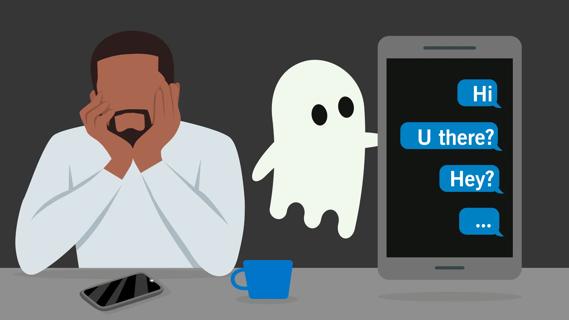
This behavior is usually a sign that the other person doesn’t know how to handle conflict or is prone to being passive-aggressive

It can be harder to let go when you’ve invested time, energy and emotions — but it might be the healthier choice long term

Attachment theory suggests that your earliest relationships shape connections throughout your life

Love languages are defined by the way you prefer to give and receive affection

There are many different ways to love someone and yourself

This superfood is loaded with vitamins, minerals and nutrients

This online subculture may contribute to self-esteem issues in teenage boys

When these tiny particles of calcium carbonate come loose, it throws your sense of balance out of whack











