Locations:





This modern twist on a traditional sauna may help support heart health, soothe sore muscles, manage pain and more
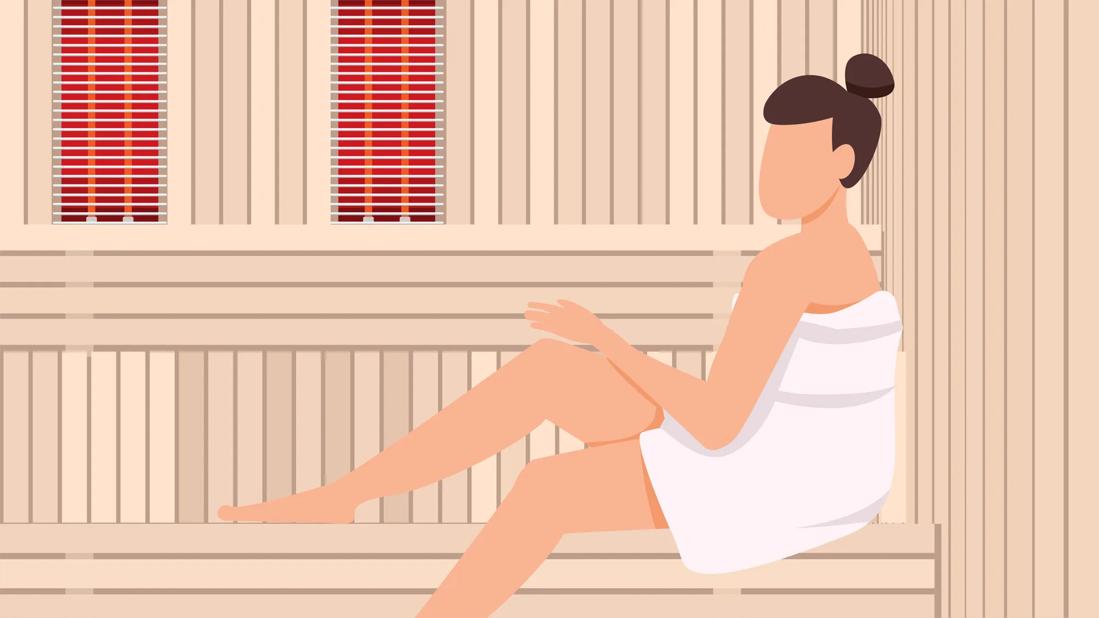
Image content: This image is available to view online.
View image online (https://assets.clevelandclinic.org/transform/d01caae0-a777-4c09-bf0b-b1f4532c4772/infrared-sauna-1224839033)
Person sitting in infrared sauna
Let’s get one thing straight: Infrared saunas are definitely “cooler” than the steam-filled sweat boxes of centuries past.
Advertisement
Cleveland Clinic is a non-profit academic medical center. Advertising on our site helps support our mission. We do not endorse non-Cleveland Clinic products or services. Policy
That’s because infrared saunas use infrared light to provide therapeutic warmth instead of relying on superheated air or steam. This process allows infrared saunas to operate at lower temperatures than traditional saunas.
But can you expect similar results? Let’s get a heat check from functional medicine specialist Melissa Young, MD.
Infrared saunas offer a modern, plug-it-in twist on an age-old wellness ritual. As the name suggests, infrared saunas use infrared lamps or panels to generate radiant heat. Instead of mainly heating the air around you, they warm your body more directly.
Traditional saunas crank up the air temperature within the entire sauna using a wood-burning, gas or electric heater. This warms you mostly through hot air.
The two approaches register vastly different readings on thermometers.
“They’ll both make you sweat, but infrared saunas tend to be gentler and more comfortable,” says Dr. Young. “You can get similar effects from each of them. Hotter doesn’t necessarily mean better.”
So, why should you lounge under infrared lamps? There are numerous potential health perks, many of which appear to mirror the benefits of traditional saunas.
Advertisement
Here are a few reasons to get sweaty under the lights.
Within minutes of sitting in an infrared sauna, your body’s natural heat response begins. Beads of sweat appear on your skin. Your blood vessels widen to increase blood flow. Your heart rate ticks up.
“It’s similar to the physiological effects of exercise,” explains Dr. Young. “Kind of think of it like passive cardio.”
But while some studies suggest sauna use may support cardiovascular function, more research is needed — especially on infrared saunas — to know whether it directly improves heart health.
Also, don’t assume that a sauna session is a substitute for a workout. It’s not.
The increased circulation that comes with heat exposure in an infrared sauna may help ease muscle soreness after physical activity. That added blood flow helps deliver oxygen and nutrients to tired muscles.
“Some people find it helps with post-workout soreness,” says Dr. Young.
Some research suggests that infrared sauna therapy might help relieve certain types of chronic pain, though many of the studies are small and additional review is needed to confirm these claims.
“The combination of warmth and relaxation may help some people manage their chronic pain,” says Dr. Young.
Warming your body may warm your soul, too. Many people find saunas relaxing, and some research suggests it may help reduce stress, improve mood and support overall well-being. Think of it as a quiet reset in a warm setting.
“Just setting aside time for yourself and some self-care can be incredibly valuable in our stressful world,” notes Dr. Young. “Add in the environment of an infrared sauna, and you get something that can be both physically and mentally relaxing.”
Sleep and body temperature are connected. As bedtime approaches, your core body temperature naturally starts to drop. This cooling is part of the process your body uses to prepare for sleep.
An infrared sauna may support that wind-down in a roundabout way to help you catch ZZZs, particularly if done in the hours before bedtime.
“Your body naturally cools down after using an infrared sauna,” explains Dr. Young. “When used before bed, this cooling process may support your body’s natural temperature drop and promote better sleep.”
Melting away stress during a sauna session may help the process, too, but more research is needed to understand exactly how saunas might improve sleep.
Studies show that frequent sauna sessions may boost your immune system, which puts your body in a better position to fight off illness, infections and general cold and flu season crud.
Advertisement
But the benefits might go beyond that, too. Regularly sitting in an infrared sauna can also help reduce oxidative stress in your body, which may help limit your risk of various diseases.
Bottom line? “The more you take care of your body, the better it can take care of you,” says Dr. Young.
Sauna use is viewed as safe, but heat exposure brings some risk. Be aware of the potential for dehydration, says Dr. Young. If you suddenly feel dizzy or nauseated, get out of the sauna immediately.
You also may want to avoid using infrared saunas in certain situations, including if:
Advertisement
If you have any pre-existing medical conditions, check with your healthcare provider before starting an infrared sauna routine.
If you want to give an infrared sauna a try, Dr. Young offers these recommendations:
“So many people are looking for ways to improve their health, and infrared saunas can be a complementary piece for your wellness program,” says Dr. Young. “I have many patients who do it and see benefit — so if you’re interested, it may be worth trying.”
Advertisement

Sign up for our Health Essentials emails for expert guidance on nutrition, fitness, sleep, skin care and more.
Learn more about our editorial process.
Advertisement

That unnerving sense that something terrible is about to happen can be a sign of serious distress — trust your gut

From hydration to meditation, little changes can yield big benefits
Practices range from simple lifestyle changes to extreme experiments — and not all approaches come with the same level of risk

Cold-water immersion offers benefits like sore muscle relief, but the therapy comes with risks, too
These wearable devices can help you understand your body and stay active — but how you use them matters most

The process delivers nutrients quickly and efficiently, but research is limited on many claimed benefits

Hot tub sessions can help relieve stress, soothe sore muscles and improve heart health

Different types of yoga poses, meditation and breathwork may help you feel more emotionally balanced

Managing your weight through physical activity may lower your chances of getting this common cancer

It typically starts in October and winds down in early spring, with cases at their highest in the middle of winter

Anxiety disorders, health conditions and past trauma can make driving nerve-wracking — help is available
 Search