Locations:





 Search
High cholesterol can be genetic, but testing and treatment can lower your heart disease risk
Genetics paint the color of your eyes, assign your blood type and give you those adorable dimples in your cheeks. But your biological parents may have passed along something else, too: high cholesterol.
Advertisement
Cleveland Clinic is a non-profit academic medical center. Advertising on our site helps support our mission. We do not endorse non-Cleveland Clinic products or services. Policy
Cardiologist Leslie Cho, MD, explains how high cholesterol runs in families and what you can do about it.
Yes, the genes you inherit can cause high cholesterol. This doesn’t mean all people with high cholesterol have genetic reasons. But it’s a possibility your healthcare provider may discuss with you, especially if your cholesterol numbers are far above the healthy range.
“High cholesterol has many possible causes,” Dr. Cho explains. “Factors like smoking, eating foods high in saturated fat and not moving around much may drive your numbers up. So can certain underlying conditions and even medications. But we also know that high cholesterol can be hereditary.”
Your genes may affect your cholesterol in two main ways:
Advertisement
FH affects about 1 in 250 people. Polygenic risk is likely much more common, but experts don’t have an exact number. Let’s dive a bit deeper into these genetic causes of high cholesterol and how they might affect you.
FH is rare but powerful. It causes dangerously high cholesterol levels starting at birth.
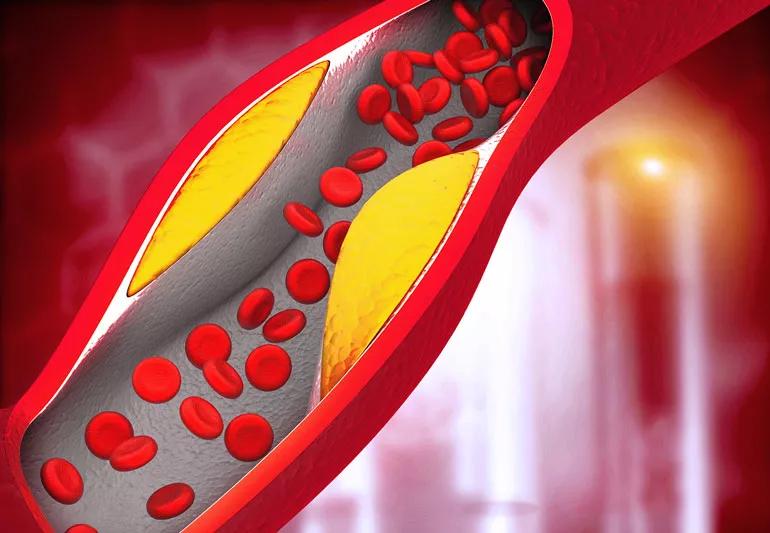
Specifically, it raises your LDL (“bad”) cholesterol. This type of cholesterol builds up in your arteries and increases your risk for dangerous blockages.
In most cases, changes in the LDLR gene drive FH. Sometimes, changes in the APOB or PCSK9 gene play a role. These genes all help your body clear LDL cholesterol from the bloodstream.
“If these genes don’t work properly, too much LDL builds up in your blood,” Dr. Cho observes.
How much, you might ask? With FH, your LDL cholesterol can measure two to five times higher than expected — often 200 mg/dL or more. (A healthy LDL for most adults is below 100.)
Since high levels start early, damage to your arteries begins sooner, too. “FH can lead to premature cardiovascular disease, which means your arteries grow narrow or blocked much earlier in life,” Dr. Cho says. You could have a heart attack or stroke in your 40s — or even earlier.
Polygenic risk is common but subtle. It raises your cholesterol gradually through many small genetic changes.
With FH, doctors can pinpoint one specific gene that causes the problem. Polygenic risk works differently. In this case, you inherit many small gene changes. Each one slightly increases your cholesterol levels over time. Together, they raise your risk for high cholesterol.
You may not show signs in childhood. But you might develop high LDL earlier than others —sometimes in your teens or 20s.
“Your healthcare provider may mention polygenic risk if you’re young and have an LDL between 130 to 194 mg/dL,” Dr. Cho says.
Polygenic risk doesn’t mean you’ll definitely have high cholesterol. That’s what sets it apart from FH. FH causes a powerful and direct change in how your body clears LDL. Polygenic risk builds more gradually.
“We’re still learning how these multiple gene changes lead to high cholesterol,” Dr. Cho notes. “But we know that a genetic predisposition can make it harder to lower LDL through diet and exercise alone.”
FH follows a clear inheritance pattern — usually from parent to child (in an autosomal dominant way, if you want to get technical). But polygenic risk doesn’t work that way. These gene changes tend to run in families but don’t follow a predictable path. So, you and your cousin might have it, even if your mom and aunt don’t.
Advertisement
No matter what your genes say, it’s possible for you to have the final word. That’s because high cholesterol, whether it’s genetic or not, is treatable.
“The key is getting a diagnosis early in life,” Dr. Cho says. “That way, the bad cholesterol has less time to do its damage.” The sooner you know your numbers, the sooner you can take action. And that can protect your heart for decades.
Here are some things you and your family can do:
Advertisement
Dr. Cho leaves us with some reassuring advice: “There are proven ways to manage high cholesterol, and you aren’t powerless. We have the knowledge and tools to lower your heart disease risk and help you enjoy the best possible quality of life for years to come.”
Advertisement
Learn more about our editorial process.
Advertisement

There isn’t enough research to recommend the supplement as a solution for lowering LDL levels

You may notice a decrease in your LDL ‘bad’ cholesterol in about four weeks
In the world of cholesterol, HDL particles are ‘good’ and LDL particles are ‘bad’ for your heart health

Medications known as statins can lower cholesterol levels to minimize the risk of blocked arteries

Fatty fish, flaxseed, extra virgin olive oil and nuts may help raise your HDL number

Grapefruit contains natural chemical compounds that can interfere with certain medications when it’s consumed in large amounts

Up to 30% of people who take the cholesterol-lowering medication feel aches and soreness
There’s not enough evidence to show that this supplement has any effect on muscle aches from cholesterol-lowering meds

The tropical fruit is a good source of antioxidants and vitamin C

Most people fall asleep within 10 to 20 minutes, but if your experience is different, adjusting your sleep schedule may help

Exploring your hidden side can lead to better understanding of what makes you tick











