Locations:





Hormonal changes, a slower metabolism and muscle loss can make weight gain more common around menopause — healthy habits can help you manage it

Image content: This image is available to view online.
View image online (https://assets.clevelandclinic.org/transform/1a9d4549-1270-4751-bc5a-707ec5b74178/woman-window-1492668082)
Older woman looking out window
If you’re of a certain age, you may be noticing that the eating and exercise habits that have worked your whole life suddenly aren’t cutting it anymore. The scale is creeping up. Your clothes are fitting differently. And the pounds are stubbornly determined to settle around your midsection.
Advertisement
Cleveland Clinic is a non-profit academic medical center. Advertising on our site helps support our mission. We do not endorse non-Cleveland Clinic products or services. Policy
You’re not alone.
“Weight gain is common before menopause and can be even more challenging after menopause,” says women’s health specialist Lynn Pattimakiel, MD.
But that doesn’t mean menopause weight gain is inevitable.
We talked with Dr. Pattimakiel and Pelin Batur, MD, both board-certified menopause practitioners, about what’s behind those body changes — and what you can do about them.
Let’s start with a little clarification: Menopause itself is technically one point in time — when you’ve gone 12 consecutive months without a period.
“The stage leading up to that is called perimenopause,” Dr. Batur clarifies. “And that’s often when weight changes begin.”
On average, menopause happens at age 52. But perimenopause can start much earlier — often four to five years before menopause.
Here’s what may be working against you.
Advertisement
Losing weight or maintaining your weight can be harder during perimenopause, but that doesn’t mean it’s entirely out of your hands.
“Being persistent is more important than working for quick results,” Dr. Batur emphasizes. “With a slow, steady approach to diet and exercise, you can incorporate changes over the long haul as part of a healthier lifestyle.”
These strategies can help.
Focus on an eating pattern built around whole, minimally processed foods.
Dr. Pattimakiel offers these tips:
Keeping a food journal can help you get a clearer picture of what, when and how much you’re eating. And it may help you identify less-than-healthy patterns you haven’t noticed.
Physical activity becomes especially important as your metabolism and body composition change.
A general goal is 150 minutes of aerobic exercise and two strength-training sessions per week.
Dr. Batur recommends:
No doubt about it, menopause symptoms, like hot flashes, mood changes, vaginal dryness and insomnia, can wreak havoc on your life. What’s more, they can make it harder to concentrate on eating well, exercising and following other healthy habits that can help you maintain your weight.
Medication-free remedies for menopause relief, like lowering stress and eating a healthy diet, can make a difference. And so might menopausal hormone therapy (also called hormone replacement therapy or HRT), which can help improve your sleep and overall quality of life.
But HRT isn’t right for everyone. Whether it makes sense for you depends on your menopause symptoms, health history, and individual risks and benefits.
Talk with a healthcare provider for personalized advice to manage your menopause symptoms.
Advertisement
If you’ve made sustainable changes to your eating and activity habits and are still gaining weight, it’s worth bringing it up with a healthcare provider.
Your healthcare team can also help identify less obvious barriers. Maybe knee pain makes exercise difficult. Perhaps your mental health is keeping you from living your best life. Or it could be that your schedule makes planning meals challenging.
Finding the reason you’re struggling is often more useful than blaming yourself — or chalking it all up to menopause.
“It’s easy for life to get in the way, so it’s a matter of figuring out what works for you,” Dr. Pattimakiel encourages. “Weight gain after menopause can feel inevitable, but it doesn’t have to be.”
Advertisement

Sign up for our Health Essentials emails for expert guidance on nutrition, fitness, sleep, skin care and more.
Learn more about our editorial process.
Advertisement
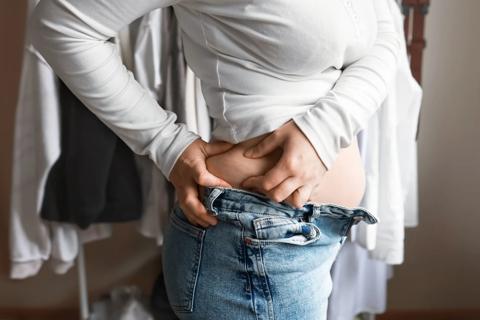
Aging and hormonal changes around menopause can shift where your body stores fat, depositing it around your midsection

Fertility drops as you age, but you can still get pregnant in perimenopause

Estrogen loss contributes to bone loss, which significantly raises your risk of osteopenia and osteoporosis
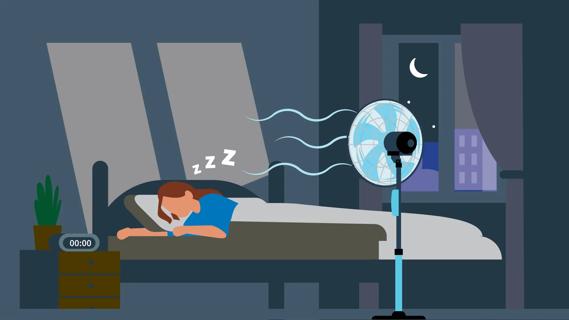
Making certain changes to your diet, sleep habits and even your wardrobe may help lessen the impact of menopause symptoms

A women’s health specialist explains those cold flashes that come on quickly
Changing hormone levels can bring issues like brittle nails, indigestion, dry skin and new allergies (to name a few!)

If you’ve noticed changes in your mood and mental health while going through menopause, you’re not alone
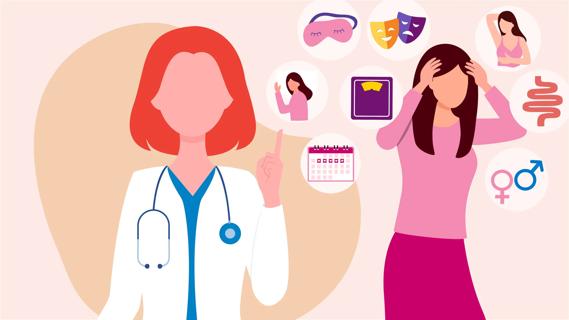
Missed periods, heavy periods, painful sex and frequent hot flashes are just a few symptoms worth discussing with your provider
Eyes typically increase to full size during two growth spurts in childhood
To start, opt for calorie-dense foods that are rich in protein and healthy fats
Pre-birth injections and monoclonal antibodies can help prevent serious complications
 Search










