Locations:
Search IconSearch
September 14, 2026/Living Healthy/Women’s Health

What Causes ‘Menopause Belly’ and What You Can Do About It

Aging and hormonal changes around menopause can shift where your body stores fat, depositing it around your midsection
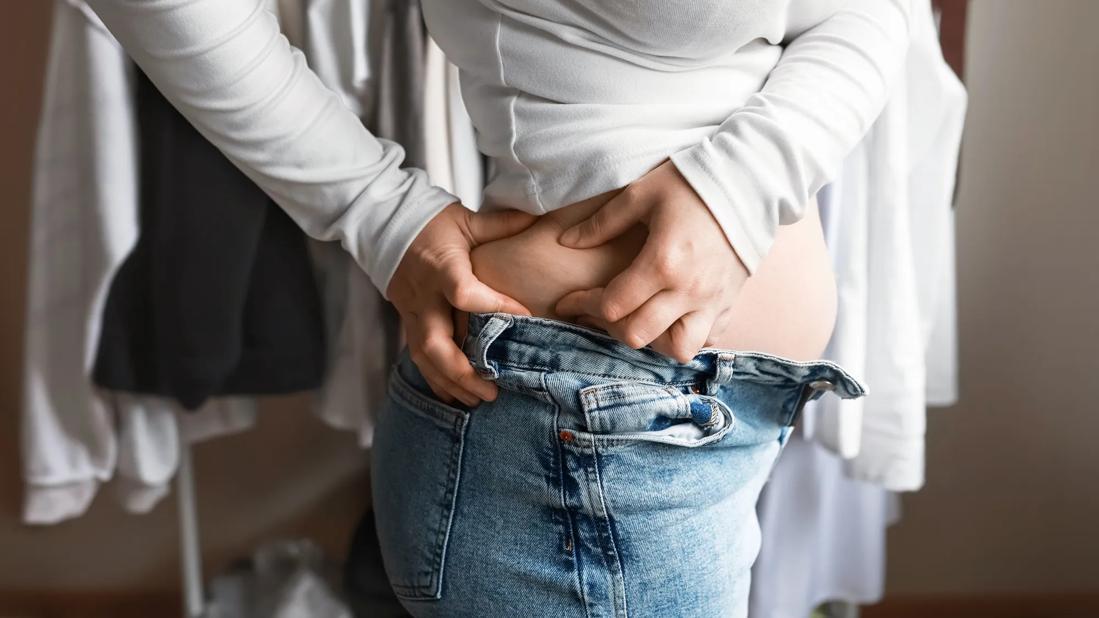
Woman pinching extra weight in her side/belly area

Even if you’ve always carried more weight in your hips, somewhere around your 40s, that can change. Your waistband can feel tighter as your weight shifts and takes up residence around your midsection.

Advertisement

Cleveland Clinic is a non-profit academic medical center. Advertising on our site helps support our mission. We do not endorse non-Cleveland Clinic products or services. Policy

That change is sometimes called “menopause belly.” And there’s a reason it happens.

Women’s health specialists and board-certified menopause practitioners Lynn Pattimakiel, MD, and Pelin Batur, MD, explain why your body shape can change around menopause — and what you can do about it.

What is menopause belly?

“Menopause belly” isn’t a medical diagnosis. It’s an informal term for the increased belly fat you may notice as you get closer to menopause.

And it can begin well before you officially reach “the change.”

Perimenopause typically begins in your 40s. It’s the stage before menopause, when your estrogen levels fluctuate and eventually decline. Menopause itself occurs once you’ve gone 12 consecutive months without a period.

It’s common to gain weight during perimenopause. It’s also normal if your body starts to change where it stores fat.

Why does menopause cause belly fat?

Menopause belly is an effect you see as your body ushers in a new era. Even if you’ve kept up the same healthy habits that have always worked for you, your waistline may no longer show it.

Here’s what’s happening in your body that can lead to increased belly fat:

  • Your estrogen levels decline. “Menopause can affect the hormones that regulate fat storage,” Dr. Batur says. “Before menopause, you may be more likely to carry fat stores around your hips and thighs. As estrogen declines, fat distribution can shift toward your abdomen.”
  • Your metabolism slows. Your body tends to burn fewer calories as you age, which can make maintaining your weight more challenging.
  • You lose muscle. Muscle mass tends to decline with age. Because muscle uses energy, muscle loss can keep your body from burning as many calories.
  • You experience menopause symptoms. Hot flashes, night sweats and other menopause symptoms can keep you from getting your ZZZs. And poor sleep can affect hormones involved in hunger, making it harder to stick with healthy eating and exercise habits.

Advertisement

Is menopause belly dangerous?

Menopause belly isn’t, by itself, a health problem. Your weight and your body shape don’t tell the whole story about your health. (And a friendly reminder for anyone who needs to hear it: They certainly don’t define your worth as a person.)

The trouble is that menopause belly can lead to visceral fat — an accumulation of fat surrounding your organs that makes your belly firm to the touch. Unlike subcutaneous fat, which is pinchable and lives just under the skin, visceral fat can affect your well-being.

Visceral fat is sometimes called “active fat” because it plays a role in how your body functions.

“High levels of visceral fat are associated with a higher risk of cardiovascular disease and metabolic problems, including high blood pressure, high cholesterol and high blood sugar,” Dr. Pattimakiel reports.

Tips for managing menopause belly

You can’t tell your body exactly where to lose fat. But healthy habits can go a long way to maintaining your weight and protecting you from visceral fat.

“Being persistent is more important than working for quick results,” Dr. Batur emphasizes.

Dr. Pattimakiel and Dr. Batur offer this advice:

  • Build meals around nutrient-rich foods. Prioritize eating more whole, minimally processed foods, like lean proteins, vegetables and other fiber-rich foods. Limit highly processed foods and added sugars. “Pay attention to what you drink, too,” Dr. Batur recommends. “Soda, alcohol, juice and specialty coffee drinks can add significant calories without making you feel satisfied.”
  • Get your cardio. Aerobic activity helps you burn calories and reduce total body fat. Aim for about 150 minutes of moderate-intensity aerobic activity each week. Walking, biking and swimming all count.
  • Don’t overlook strength training. Maintaining and building muscle becomes particularly important as you age. Core exercises are great for strengthening your abs, but they can’t reduce belly fat. So, do your crunches, but don’t neglect other strengthening activities, like squats, lunges and free weights.
  • Make sleep a priority. Sleep deprivation can affect the hormones that regulate your appetite, making you want to eat more. Of course, “get more sleep” can be easier said than done when stress, hot flashes and night sweats are keeping you up. If menopause symptoms are regularly interfering with your sleep, talk with a healthcare provider about ways to manage them.
  • Manage your stress. Stress can increase levels of the hormone cortisol, and high cortisol has been associated with visceral fat accumulation. Self-care matters. Do things that bring you joy, and seek mental health treatment for mood shifts, symptoms of anxiety and depression, and other concerns.
  • Consider whether anti-obesity medication is right for you. If you have obesity and related health concerns, weight loss medications may be an option. These medications aren’t specifically treatments for menopause belly. But when medically appropriate, they may be part of a broader plan for reducing excess body weight — including visceral fat — which can improve your overall health.
  • Talk with a provider about menopausal hormone therapy (aka hormone replacement therapy or HRT). Hormone therapy isn’t a weight-loss treatment, but some early reports suggest that people who use it also tend to have a leaner body mass index (BMI). That may be because the treatment can help improve energy, functioning and insulin resistance.
  • Manage other health concerns. Thyroid problems, depression, certain medications and other health concerns can also contribute to weight changes and belly fat. Work with a healthcare provider to understand what’s behind your weight change and create a plan to manage it.

Belly fat can be stubborn. And that can be frustrating, especially when you feel like you’re doing everything “right.”

Remember, the goal isn’t to look like you did in your 20s. It’s to support the body you have now and stay healthy and strong — through menopause and beyond.

Advertisement

Cleveland Clinic icon
Health Essentials logo
Subscription icon

Better health starts here

Sign up for our Health Essentials emails for expert guidance on nutrition, fitness, sleep, skin care and more.

Learn more about our editorial process.

Related Articles

Older woman looking out window
September 14, 2026/Women’s Health

Menopause Weight Gain: Why It Happens and What To Do About It

Hormonal changes, a slower metabolism and muscle loss can make weight gain more common around menopause — healthy habits can help you manage it

Woman holding pregnancy test stick, looking out the window
May 6, 2026/Women’s Health

Perimenopause and Your Fertility: What To Know

Fertility drops as you age, but you can still get pregnant in perimenopause

Older woman talking with healthcare provider
January 9, 2026/Women’s Health

What To Know About Menopause and Bone Loss

Estrogen loss contributes to bone loss, which significantly raises your risk of osteopenia and osteoporosis
Woman sleeping in bed with fan blowing on her
November 12, 2025/Women’s Health

How To Manage Menopause Without Hormone Therapy

Making certain changes to your diet, sleep habits and even your wardrobe may help lessen the impact of menopause symptoms

woman wearing socks to bed
November 6, 2025/Women’s Health

Are Premenopausal Cold Flashes a Thing?

A women’s health specialist explains those cold flashes that come on quickly

Woman leaning on arms, staring blankly ahead
July 14, 2025/Women’s Health

29 Perimenopause Symptoms You May Not Know About

Changing hormone levels can bring issues like brittle nails, indigestion, dry skin and new allergies (to name a few!)

A stressed-looking woman sitting on couch, with hand on forehead
March 28, 2025/Women’s Health

Can Menopause Cause Anxiety?

If you’ve noticed changes in your mood and mental health while going through menopause, you’re not alone
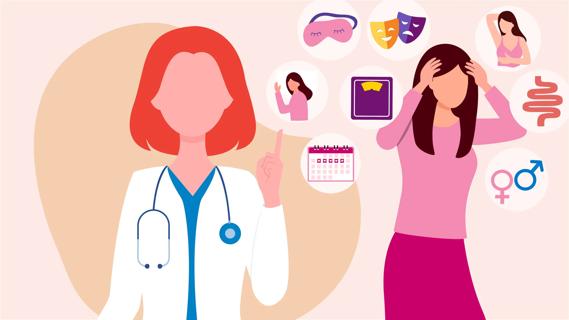
Healthcare provider pointing to menopause symptoms floating around female with hands on head
January 20, 2025/Women’s Health

When You Should See a Doctor About Menopause (or Perimenopause) Symptoms

Missed periods, heavy periods, painful sex and frequent hot flashes are just a few symptoms worth discussing with your provider

Trending Topics

Person sitting on edge of bed with their hands pressed on their breasts

Is Your Breast Pain a Cause for Concern?

Most breast pain isn’t a sign of cancer, but certain symptoms deserve a closer look

Healthcare provider talking with patient who is holding the back of their head

Is It True That You Can’t Go To Sleep With a Concussion?

It’s a myth that you should avoid sleep (or have someone wake up throughout the night) after a head injury

Three urine samples of different shades ready for lab testing

Urine Color Chart: What the Color of Your Pee Says About You

The color and shade of your urine offer a window to your health

Ad