Locations:





A women’s health specialist explains those cold flashes that come on quickly
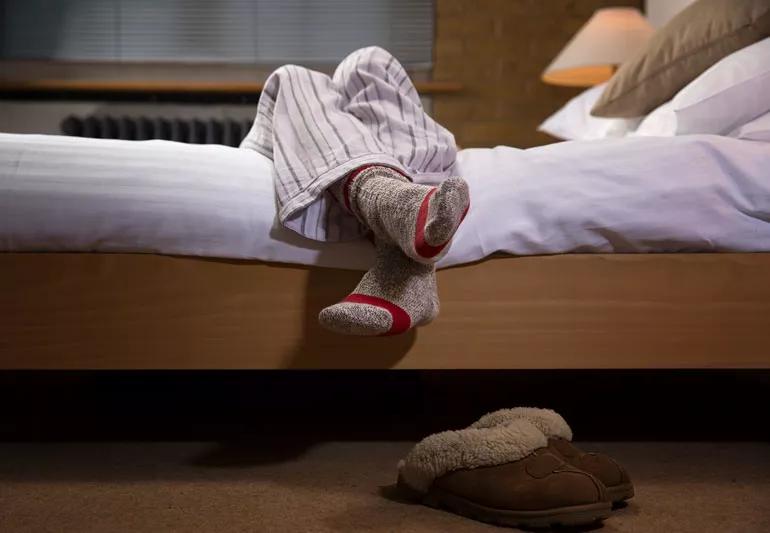
Image content: This image is available to view online.
View image online (https://assets.clevelandclinic.org/transform/d280ad9c-9026-4607-b75b-fc78477e36e5/coldFlashes-167160397-770x533-1_jpg)
woman wearing socks to bed
If you’re over the age of 35 and you’ve been having sudden cold flashes either right before bed or in the middle of the night, you’re probably asking yourself a series of questions to explain them.
Advertisement
Cleveland Clinic is a non-profit academic medical center. Advertising on our site helps support our mission. We do not endorse non-Cleveland Clinic products or services. Policy
No, the window isn’t open and nope, the A/C didn’t just kick on. You’re not feeling sick, and it feels different than the chills you feel when you are sick.
You may also think, “I’ve heard about hot flashes and menopause, but are cold flashes a thing?”
“Hot flashes are more common, but the answer is yes, cold flashes are also very much a thing for women before or during menopause,” women’s health specialist Holly L. Thacker, MD, says.
While your circadian rhythm normally makes you feel a bit cooler at night, cold flashes can be a manifestation of temperature instability — a very common occurrence for women during their midlife.
During the day, you’re likely engaging in more physical activity and less likely to experience cold flashes, but they can happen occasionally then, too.
Yes, it’s mostly because of your hormones.
“During midlife your hormones are fluctuating. With fluctuating hormones your brain’s internal thermostat becomes more sensitive. This means you may suddenly notice feeling either hot or cold sensations,” Dr. Thacker says.
It’s that inability of the body to regulate temperature at these times that causes your temperature to decrease or increase quickly.
Cold flashes most commonly run their course fairly quickly and usually pass in a few minutes at most. But in some cases they can last up to 20 minutes.
Advertisement
“While they aren’t intolerable, they also aren’t pleasant,” Dr. Thacker says. “The good news is there are many things you can do to manage them.”
“Hormonal and nonhormonal options are also available to help with general temperature instability,” Dr. Thacker says. “Make sure you talk to your women’s health specialist to discuss options that may be right for you.”
Advertisement

Sign up for our Health Essentials emails for expert guidance on nutrition, fitness, sleep, skin care and more.
Learn more about our editorial process.
Advertisement
Aging and hormonal changes around menopause can shift where your body stores fat, depositing it around your midsection

Hormonal changes, a slower metabolism and muscle loss can make weight gain more common around menopause — healthy habits can help you manage it

Fertility drops as you age, but you can still get pregnant in perimenopause

Estrogen loss contributes to bone loss, which significantly raises your risk of osteopenia and osteoporosis
Making certain changes to your diet, sleep habits and even your wardrobe may help lessen the impact of menopause symptoms
Changing hormone levels can bring issues like brittle nails, indigestion, dry skin and new allergies (to name a few!)

If you’ve noticed changes in your mood and mental health while going through menopause, you’re not alone
Missed periods, heavy periods, painful sex and frequent hot flashes are just a few symptoms worth discussing with your provider

Managing your weight through physical activity may lower your chances of getting this common cancer
It typically starts in October and winds down in early spring, with cases at their highest in the middle of winter

Anxiety disorders, health conditions and past trauma can make driving nerve-wracking — help is available
 Search










