Locations:


While they may feel validating, the four types of OCD can limit understanding and treatment
If you see obsessive-compulsive disorder (OCD) as just being overly cautious of germs or very particular about organization, you’re not alone. It’s a common stereotype of this mental health condition.
Advertisement
Cleveland Clinic is a non-profit academic medical center. Advertising on our site helps support our mission. We do not endorse non-Cleveland Clinic products or services. Policy
But OCD is much more complex than that. The thoughts and behaviors associated with it can show up in many different ways. And it can feel exhausting and difficult to explain to others.
Psychologist Dawn Potter, PsyD, talks about the common types — or themes — of OCD, and why focusing on them isn’t always helpful.
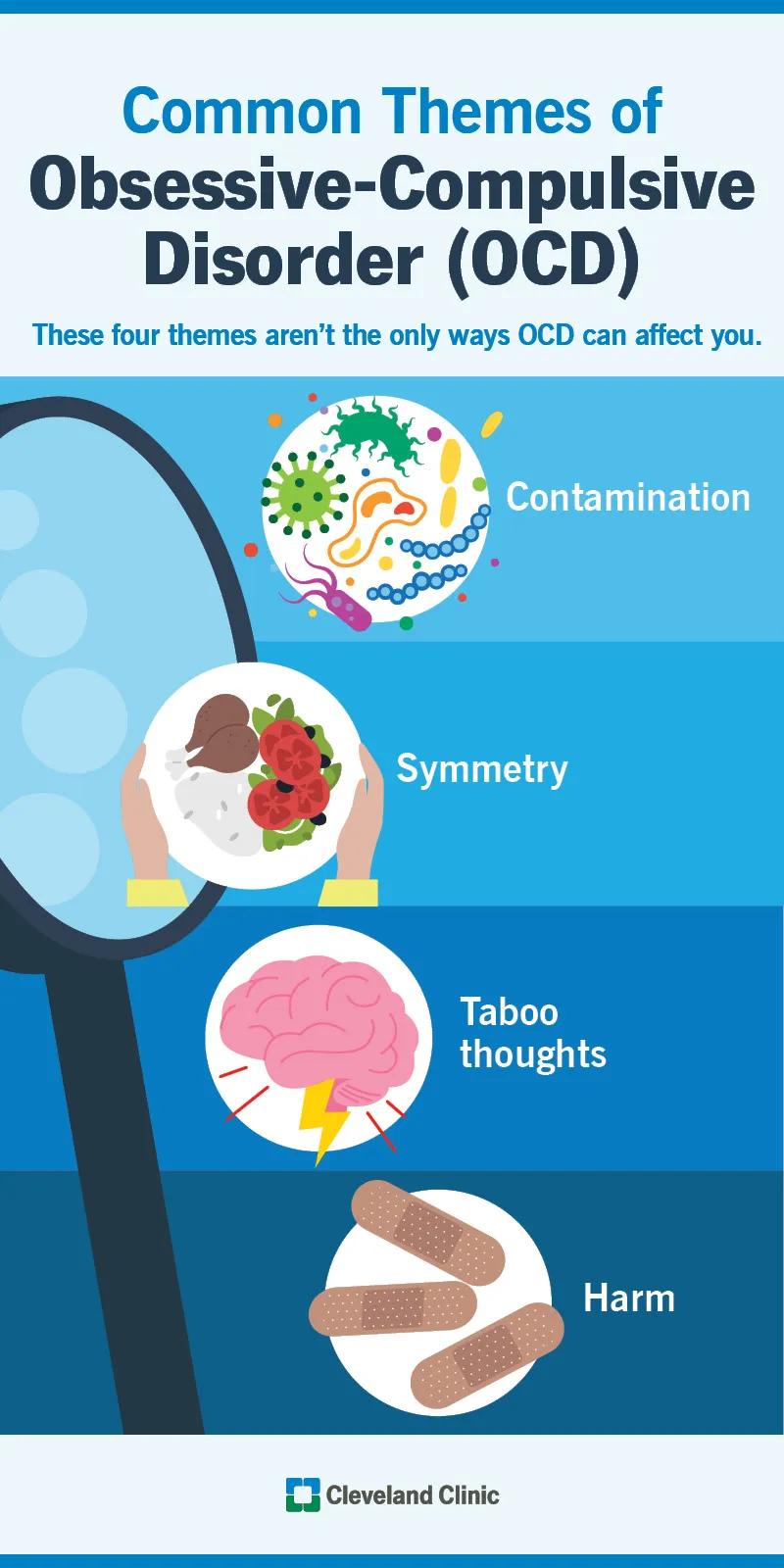
Image content: This image is available to view online.
View image online (https://assets.clevelandclinic.org/transform/06bb3756-8f8c-43cc-b4dc-0b6d5a320584/types-of-OCD-custom-infographic)
OCD is a mental health condition that causes unwanted thoughts and fears (obsessions) that lead to repetitive behaviors (compulsions).
“The specific content of obsessions and compulsions varies between people,” says Dr. Potter. “But certain themes are common.”
While these themes can be useful for understanding OCD symptoms, they’re not official diagnoses.
In fact, the DSM-5, the reference book that defines mental health conditions, doesn’t recognize OCD types as separate disorders. But it mentions common themes.
“What matters in an OCD diagnosis is that you have obsessions, compulsions or both, and you spend more than an hour per day on them,” explains Dr. Potter. “So, it’s important to see a mental health professional if you have these symptoms, regardless of the theme of them.”
Learning about common OCD themes can help you recognize symptoms and feel more comfortable reaching out for help. You may also feel less alone knowing that others have similar intrusive thoughts and rituals.
Advertisement
Let’s take a look at four common themes.
Contamination OCD is perhaps the most well-known type. It means you fear touching things you think are contaminated. You may be afraid of body fluids, germs, chemicals and/or dirt.
Compulsions may include:
Symmetry OCD comes with feelings of deep unease when things are uneven, unbalanced, incomplete or not “quite right.” These experiences can lead to repetitive cycles of arranging or checking until things feel OK.
Examples of compulsions include:
This subtype of OCD involves obsessions that feel taboo, harmful or wrong. They have sexual, religious or moral themes.
You may have intrusive thoughts, like “What if I turn into a pedophile?” Or disturbing images may pop into your mind, like being aggressive toward an animal, but there’s no reason to believe that could happen.
Examples of compulsions include:
Harm OCD is a common form of taboo OCD. You may have unwanted thoughts or mental images of harming someone in various ways.
Compulsions can include:
These four types are just a partial glimpse into OCD.
“Other sources may divide OCD themes into additional categories, like relationship OCD or purely obsessional OCD,” Dr. Potter adds. “These types may help people notice OCD symptoms, but they don’t represent all the ways this condition can affect you.”
So, if OCD types aren’t official diagnoses, do they matter when it comes to treatment?
Not really.
Currently, the go-to form of treatment for any type of OCD is exposure and response prevention (ERP) therapy. This type of talk therapy helps you gradually face your fears without responding with compulsive behaviors.
Advertisement
“Psychologists typically don’t make the types a central focus during treatment,” Dr. Potter clarifies. “The goal of talk therapy is to separate the person from the content of the intrusive thought.”
For example, an intrusive thought that you might accidentally hurt your dog can make you feel guilty or ashamed. But the thought is an OCD symptom, not a reflection of your values or character. And it doesn’t make you a bad pet parent.
“It’s unhelpful to over-identify with the content,” Dr. Potter emphasizes. “We want you to see that no matter what type of thought it is, it’s OCD. Your brain is just manufacturing this signal of danger or disgust. We want people to recognize that OCD is the issue, not the specific thought itself.”
If intrusive thoughts are getting in the way of your everyday life, let your healthcare provider know. It may be OCD, even if your symptoms don’t fit neatly into one of the commonly discussed types.
“The most important thing isn’t identifying your OCD theme,” Dr. Potter states. “It’s getting the right diagnosis and treatment, so your symptoms don’t continue to interfere with daily life.”
Advertisement

Sign up for our Health Essentials emails for expert guidance on nutrition, fitness, sleep, skin care and more.
Learn more about our editorial process.
Advertisement

Mood stabilizers promote long-term mood stability, while antipsychotic medications work faster to manage acute episodes

Different medications can help manage different aspects of this condition

Self-stimulating behaviors can help you self-regulate or cope with intense emotions

Fishing for compliments, provoking conflict and pouring on the melodrama are all ways of expressing an unmet need

By setting boundaries around how much you give, you can save your time and resources while also being a good person

Whether it’s playing hooky or faking cancer, malingering behavior is always motivated by personal gain

Causes range from psychological conditions like PTSD to physical conditions like fibromyalgia

Always putting others’ happiness before your own can build resentment over time
Eyes typically increase to full size during two growth spurts in childhood

To start, opt for calorie-dense foods that are rich in protein and healthy fats

Pre-birth injections and monoclonal antibodies can help prevent serious complications
 Search