Locations:





The process can range from six months to more than a year, depending on whether you have immediate or two-stage reconstruction

Image content: This image is available to view online.
View image online (https://assets.clevelandclinic.org/transform/c45e219b-9a5a-404b-92de-241ccf12d2a5/doc-patient-talk-breast-1496407936)
Healthcare provider talking to patient about her breast health
If you need to have surgery for early breast cancer, you’ll have the chance to decide whether you want to undergo breast reconstruction surgery. Some women choose not to. Others want their chests to look as close as possible to the way they did before mastectomy (or even a little fuller or uplifted). It’s all up to you.
Advertisement
Cleveland Clinic is a non-profit academic medical center. Advertising on our site helps support our mission. We do not endorse non-Cleveland Clinic products or services. Policy
If you do choose reconstruction, what sort of timeline can you expect?
“When breast cancer is detected early or for preventive cases, many women are able to do a single-stage mastectomy and reconstruction — meaning it happens all in one surgery,” says plastic surgeon Risal Djohan, MD.
Ultimately, how long your breast reconstruction process takes will depend on your cancer treatment plan, your preferences and the type of surgery you have. But when breast cancer is caught early, you may be able to expect a timeline of as little as six months — or even less, Dr. Djohan says.
Here’s a look at the general reconstruction timeline for early breast cancer, including factors that play a role:
Advertisement
An important note: We’re specifically talking here about options for early breast cancer. Advanced breast cancer often requires “delayed reconstruction” — flat closure after a mastectomy, without a tissue expander. “That gives your care team time to treat the cancer and optimize your health so they can do reconstruction later on,” Dr. Djohan explains.
But for early breast cancer, here’s a deeper look at the options and possible timeline.
Your timeline starts before you ever enter the operating room. After a breast cancer diagnosis, you’ll meet with your care team to talk about plans for mastectomy and reconstruction. That includes:
Your surgeons will share all the factors that will guide these decisions. They’ll also help decide what type of breast reconstruction is right for you:
If you’re having a lumpectomy, your options will look a little different. If your breasts are small, you may not need any reconstruction. If your breasts are large, your surgeon may recommend oncoplasty — breast reconstruction using breast reduction techniques and/or breast lift techniques. That happens during the same surgery as your lumpectomy.
We know: It’s a lot to figure out. But your team will be by your side to answer questions and help guide you throughout the process.
When the mastectomy is done, your plastic surgeon will step in. If you’re having immediate reconstruction, they’ll do the procedure right then and there.
“If you’re going with two-stage reconstruction, your surgeon will place a tissue expander,” Dr. Djohan explains. “This temporary implant helps shape the breast area before you get your permanent reconstruction.”
Advertisement
Recovery begins immediately after surgery. But how long it takes will depend on the specifics of your procedure. “We estimate about six to eight weeks,” Dr. Djohan says. “But your care team will provide a timeline that’s specific to you.”
They’ll also tell you what activities to avoid and what symptoms to be on the lookout for after surgery, like any signs of infection.
About a week after surgery, you’ll attend a postoperative visit so your surgeon can check on your incisions. They’ll likely remove any surgical drains placed during surgery.
“If you had immediate reconstruction, your surgeon will let you know how often you need to come in for follow-up visits,” Dr. Djohan says. “They’ll want to assess your breast shape, see how your scars are healing and discuss options like nipple tattooing.”
If you’re having two-stage reconstruction, you’ve got a few more steps to go. Here’s what it’s likely to entail.
Once your surgeon has placed a tissue expander, you’ll need to go through an “expansion phase” to stretch your breast tissue before reconstruction.
Starting a few weeks after surgery, you’ll attend appointments to have your tissue expander filled with saline or air. You’ll return every week or two for several weeks — until the skin has expanded enough so your surgeon can create as natural a breast shape as possible.
Advertisement
“After the final expansion, the tissue expander will be left in place for a few months to give that newly stretched tissue some time to settle into place,” Dr. Djohan says.
Reconstruction happens during a second surgery. This is when your tissue expander is removed and replaced with either implants or tissue from elsewhere in your body.
Again, your recovery depends on the type of surgery you had.
You’ll need to avoid strenuous physical activity for four to six weeks, and you’ll have some bruising and swelling that will go down with time. But again, your care team will give you aftercare instructions.
Advertisement
“In the months after your surgery, the appearance of your reconstructed breast will start to improve,” Dr. Djohan reassures.
During this time, you’ll attend follow-up appointments with your surgeon. They’ll want to keep a close eye on how you’re healing and talk about the possibility of any additional procedures, like:
Both are outpatient procedures that don’t usually require hospital stays.
The decision to have breast reconstruction is extremely personal, and you’ll have a lot of decisions to make along the way. But you won’t be going through any of it alone.
“Every detail of your treatment and reconstruction will be tailored to your diagnosis and preferences,” Dr. Djohan emphasizes. “And your plastic surgeon, breast surgical oncologist and the rest of your care team will be there every step of the way to help you make all those decisions.”

Sign up for our Health Essentials emails for expert guidance on nutrition, fitness, sleep, skin care and more.
Learn more about our editorial process.
Advertisement

Managing your weight through physical activity may lower your chances of getting this common cancer
Not all breast lumps signal cancer, and not all breast cancer causes lumps — it’s important to know the facts

BRCA1/2 gene mutations can raise your risk for breast, prostate and other cancers — genetic testing can help you take proactive steps
If you’re of Ashkenazi Jewish descent, these tests may be a reasonable starting point — but more thorough genetic testing can go much deeper

Breast cancer treatments can lower estrogen, which has a ripple effect on your bones
Breast cancer treatments can lower your fertility, but egg freezing and other preservation measures may be an option
To help yourself heal, prepare your home for recovery ahead of time and tend to your physical and mental health
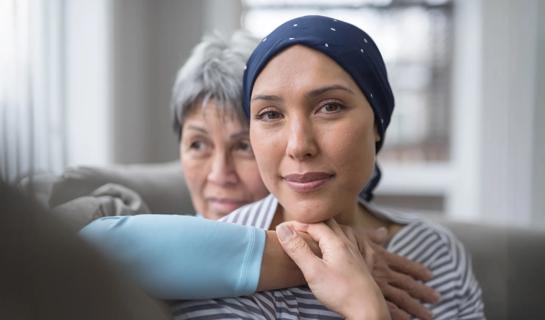
Practical help and honest conversations can make a meaningful difference
Managing your weight through physical activity may lower your chances of getting this common cancer

It typically starts in October and winds down in early spring, with cases at their highest in the middle of winter

Anxiety disorders, health conditions and past trauma can make driving nerve-wracking — help is available
 Search










