Locations:





 Search
How to handle the thicket of long hairs sprouting from your nose
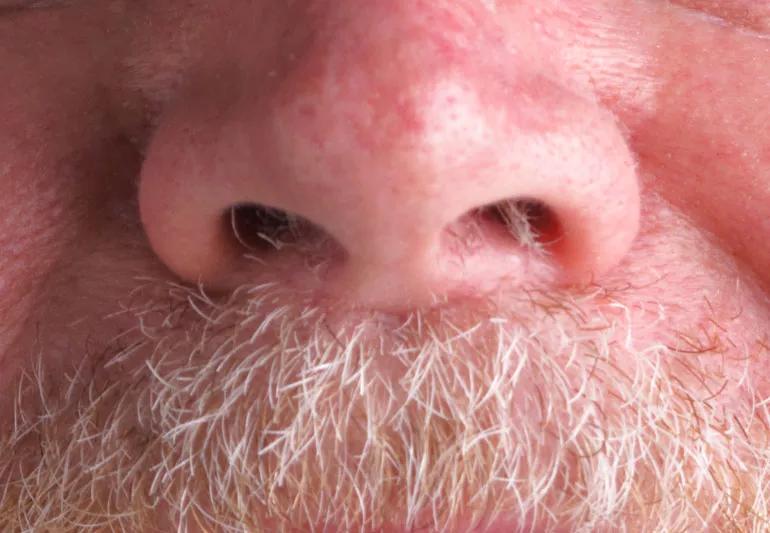
Image content: This image is available to view online.
View image online (https://assets.clevelandclinic.org/transform/c16907a4-dc69-4e7a-9324-5524093d9996/noseHairsLong-173596341-770x533-1_jpg)
man with long nose hairs
Something catches your eyes as you glance in the mirror. You lean in for a closer look, and that’s when you see it — a thicket of long nose hairs waving from your nostrils like party streamers.
Advertisement
Cleveland Clinic is a non-profit academic medical center. Advertising on our site helps support our mission. We do not endorse non-Cleveland Clinic products or services. Policy
Questions immediately fill your head. When did those sprout? How did they get sooooo long? And can air still get through that forest of horrors?
First, relax. Nose hairs are a natural part of life. In fact, the inner surface of your nose has as many hair follicles as the top of your head. They’re in place for an important reason, too, says Michael Benninger, MD, an ear, nose and throat specialist.
So, let’s learn a little more about nose hairs from Dr. Benninger, plus get some tips on taming them.
Consider nose hairs a natural air filter. “As you breathe through your nostrils, the hair in your nose blocks and collects dust, pollen and other particles that could make their way to your lungs,” explains Dr. Benninger.
A thin layer of mucus coats nose hair, which helps those particles stick to the hair. These tiny bits of airborne debris eventually end up in the mucous blanket on the inner wall of your nasal passages.
From there, the trapped particles either get swallowed or blown out into a tissue or through a sneeze.
“Your nose hairs really do get the job done,” says Dr. Benninger.
Studies show that more nose hair can be a good thing, too. Researchers found that a dense layer of nose hair can actually decrease your risk of developing asthma in conjunction with hay fever (allergic rhinitis).
Advertisement
Aging brings lots of interesting bodily developments — and that includes changes to your nose hair, notes Dr. Benninger.
Nose hairs naturally get longer and thicker as you get older. It’s part of a process called anagen sensitivity, or basically, long-term exposure to hormones in your body. (The same phenomena can fuel troll-doll hair in your ears and on your eyebrows.)
Invest in some nose hair trimmers if you want to address a sudden bushiness in your schnoz. These may be special tiny scissors with safely rounded tips or a whirring gadget that amounts to a nostril weed whacker.
Note that this isn’t going to be a one-and-done job. The nose hair will grow back. (Fast fact: The average nose hair follicle grows over 6 feet during a person’s lifetime, which definitely explains why this is a concern.)
Resist the urge to just pull nose hairs out. Plucking or waxing the hairs in your nostrils can lead to ingrown hairs and infections. A study of people with nasal vestibulitis, a common nasal infection, identified nose hair plucking as a main risk factor.
The bottom line on long nose hair? It’s more of a personal grooming matter than a medical issue. “Long nose hairs won’t hurt you,” assures Dr. Benninger. “But if you remove them incorrectly, they can cause problems.”
Advertisement

Sign up for our Health Essentials emails for expert guidance on nutrition, fitness, sleep, skin care and more.
Learn more about our editorial process.
Advertisement

Reduce unnecessary antibiotics to help your immune system

Signs like fever, breathing problems and muscle weakness, along with red patches and pus-filled bumps, mean it’s time for emergency treatment
Understanding what sets off this serious skin condition can help you recognize when you need urgent care

Obstructive sleep apnea can lead to high blood pressure — and vice versa

A combination of medications, monitoring and daily habits can help you keep sodium and fluid levels in check

Breast cancer treatments can lower estrogen, which has a ripple effect on your bones

Breast cancer treatments can lower your fertility, but egg freezing and other preservation measures may be an option

Your dollar bills, coins and cards are covered in germs — but they’re very unlikely to make you sick
These tiny saltwater larvae can get trapped under your swimsuit and trigger an itchy reaction called seabather’s eruption

Searching nature for edible items requires training and knowledge to avoid poisonous plants
Yes, but you can protect yourself with hats, scarves or even hair sunblock











