Locations:





 Search
Your veins might look blue, but that’s not the color of the blood flowing inside
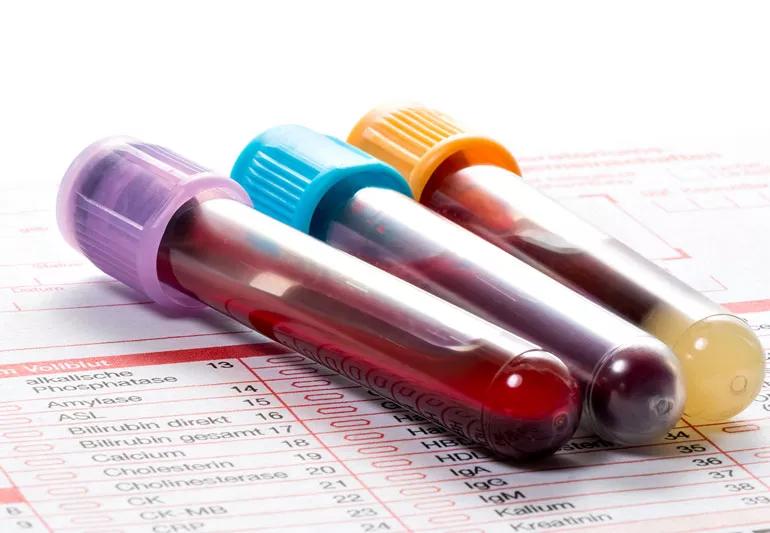
Look at the back of your hands. Odds are you see a highway system of squiggly lines running from your knuckles to your wrist. Here’s a question, though: Why do those blood-filled veins look blue?
Advertisement
Cleveland Clinic is a non-profit academic medical center. Advertising on our site helps support our mission. We do not endorse non-Cleveland Clinic products or services. Policy
It’s a question lobbed at Google’s search engine thousands of times a day, so it’s safe to say people are curious.
So, what color is the blood flowing inside of your body? Hematologist Alan Lichtin, MD, has the answer.
There’s no need to build up the suspense: Blood is red. It might vary from a bright cherry red to a dark brick red, but it’s always red.
“If you get a cut,” says Dr. Lichtin, “red is the only color you’re going to see come out.”
The reason? It has to do with the hemoglobin molecules within your red blood cells. Hemoglobin transports oxygen throughout your body in a fast-moving taxi system that keeps your cells and tissues operating properly.
Each hemoglobin molecule includes a protein called heme that contains iron. When iron reacts to oxygen, it becomes red. That interaction is what gives blood its red color.
In a way, yes — but it always stays a shade of red.
Blood that just loaded up on oxygen while flowing through your lungs and heart looks bright red, notes Dr. Lichtin. Your heart pumps this oxygen-rich blood to the far reaches of your body. (Fun fact: More than 60,000 miles of blood vessels run through your body.)
As this arterial blood flows through your circulatory system, your body pulls out the oxygen it needs. As the oxygen leaves, your blood slowly darkens. Eventually, it looks muddy red in color, says Dr. Lichtin.
Advertisement
This dark-and-depleted blood is what you see in the blueish veins just under your skin. At that point, the venous blood is headed back toward your heart and lungs for reoxygenation.
Your blood, by the way, goes out and back about three times a minute in this amazing process.
Back to that vein on your hand. When you look at it, there’s no denying its blue hue. “That’s an optical illusion created by how light goes through your skin and the vein wall,” explains Dr. Lichtin. “Blood is not blue.”
Well, at least in humans. Blue blood does flow through the veins of a few living things, including horseshoe crabs and octopuses. (The blood in those animals uses a copper-containing protein called hemocyanin to carry oxygen, which explains the blue color.)
You can even find green blood and purple blood in the animal kingdom, primarily in worms or similar creepy crawlies. And of course, the fictional character Spock from “Star Trek” bled green … but he was Vulcan.
While we’re in the green section of the crayon box, there’s a rare condition called sulfhemoglobinemia that can tint your blood that color.
The disorder happens when a sulfur atom changes the chemical reaction taking place within hemoglobin. The condition is typically caused by medications with sulfur-containing compounds. Symptoms include blood that carries a dark green tint.
The funky color is temporary, though. As new red blood cells form, your blood changes back to a more familiar look.
“Blue bloods” is just a term that references a noble family lineage or a college athletic team with a history of winning. Consider it a colorful phrase — not a medical description.
“Blood is red,” reiterates Dr. Lichtin. “There’s not much else to say.”
Advertisement
Learn more about our editorial process.
Advertisement
Fewer than 50 people have ever been found to have golden blood, a genetic change that’s also called Rh null blood
People of any blood type can receive donations of Type O-negative blood

Focus on eating iron-rich foods and hydrating

To avoid sleep deprivation and shift work sleep disorder, try adopting habits that minimize light exposure and prioritize daytime sleep

Cravings are a natural response to hormonal changes, but giving into them may make you feel worse

Gentle care, like moisturizing, washing and soft brushing, can help clear up cradle cap

Most babies will crawl between 7 and 10 months old, but later can be normal, too

People with PKU need to avoid high-protein foods, like meat, dairy, legumes and whole grains

The tropical fruit is a good source of antioxidants and vitamin C

Most people fall asleep within 10 to 20 minutes, but if your experience is different, adjusting your sleep schedule may help

Exploring your hidden side can lead to better understanding of what makes you tick











