Locations:





Weightlifting can help you build muscle mass, reduce joint pain and increase flexibility to improve your quality of life
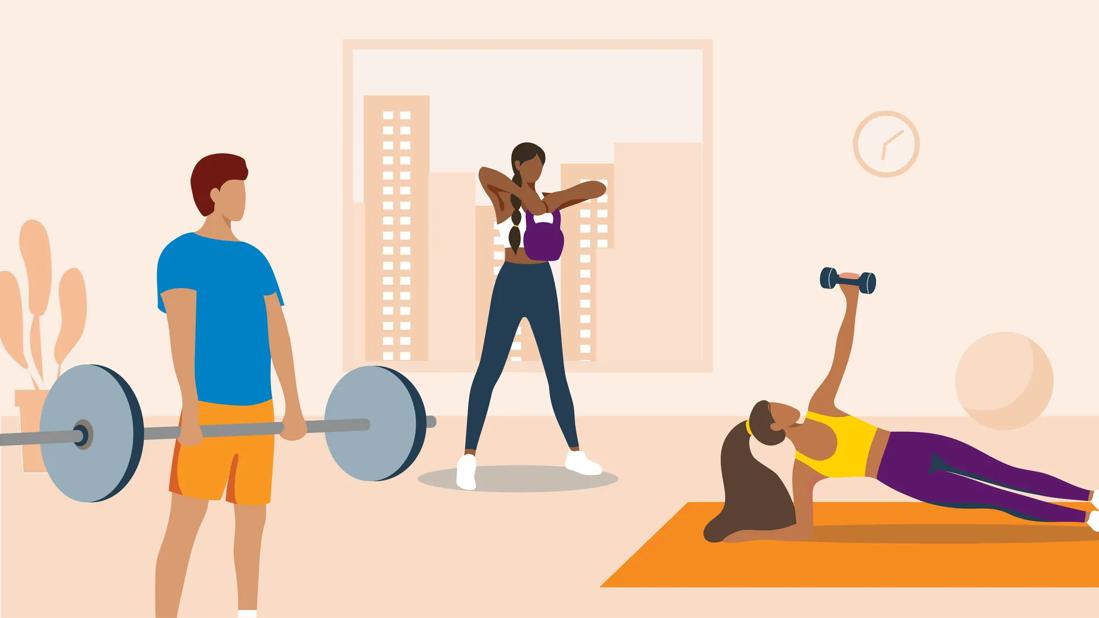
Image content: This image is available to view online.
View image online (https://assets.clevelandclinic.org/transform/1ddd809a-8f70-42a8-8c13-e49915e44e60/lifting-weights-gym-2219863882)
People at the gym lifting different kinds of weights
Weight training can seem daunting, especially when you’re a beginner. With all the different kinds of weights, machines and movements, it can be hard to get a grip on it all.
Advertisement
Cleveland Clinic is a non-profit academic medical center. Advertising on our site helps support our mission. We do not endorse non-Cleveland Clinic products or services. Policy
Fortunately, anyone can pick up weightlifting, and at any age. You just need to have a solid goal in mind and a little education on proper form.
Exercise physiologist Christopher Travers, MS, breaks down some of the secrets behind lifting weights and how to start a strength training program.
Lifting weights is a form of resistance training or strength training. It helps you build stronger and leaner muscles, which can improve your quality of life by preventing injury and sustaining your ability to do everyday activities.
Weightlifting can involve:
“With weight training, you’re using your body to move any object of resistance,” explains Travers. “It can be anything. It can be medicine balls or even household objects like soup cans or milk jugs filled with sand.”
As you gain more muscle, you progress your training by increasing the amount of weight, reps or sets of each exercise.
Lifting offers full-body benefits that include:
Advertisement
“As we age, we start losing lean muscle mass, which means our metabolism starts to slow down,” says Travers. “The stronger your muscles are, the better joint health you can have. That allows you to be more mobile as you age and be able to lift and do things you want to do as you get older.”
With weight training, you want to build a solid foundation and have a clear set of goals in mind for what you’re trying to achieve.
“To build muscular strength, you’re looking at using higher weights and lower ranges of sets and reps,” clarifies Travers. “If you’re looking to build endurance, go with lower weights and a higher number of sets and reps.”
You might have different goals at different times. But for beginners, Travers recommends starting with the following:
“I always recommend starting with body weight exercises and doing two sets of eight to 15 repetitions for each exercise the first time you’re going through them,” says Travers. “The idea is that you would do those exercises until they become easier for you, and then you would gradually add different exercises, more weights or more sets and reps week after week.”
Under these guidelines, a four-week weight training program might look like this:
Focus on body weight exercises, with two sets of eight to 15 reps for each exercise:
Continue with the same routine as week one, but add resistance band exercises, like:
“Once you’re a couple of weeks in, you can start replacing body weight exercises with weight machine exercises,” says Travers:
"After week four, you’ll continue to progress your weight training and by week six you’ll have a full lifting program established,” he notes.
“When lifting weights, you want to hit every major muscle group — your chest, back, shoulders, biceps, triceps, core and legs,” says Travers.
Advertisement
Your legs move you every day. In fact, three of your largest muscle groups are in your lower body — your glutes, hamstrings and quadriceps. Keep them strong and you may minimize knee and hip pain.
The same can be said for other parts of your body, too. The more you focus on building strength and muscle in your entire body, the more benefits you’ll discover.
Travers recommends these weight training exercises once you’re in full swing:
“The more strength training you do, the more you increase your lean muscle mass, which in turn helps raise your resting metabolic rate,” he highlights. “That then helps you burn more calories.”
Advertisement

Sign up for our Health Essentials emails for expert guidance on nutrition, fitness, sleep, skin care and more.
Learn more about our editorial process.
Advertisement
It helps to build up your strength and balance before tackling these more resistance-heavy TRX exercises
Glute bridges are simple bodyweight exercises worth adding to any workout
Stay afloat with bicycle kicks, alternating punches and water jogging
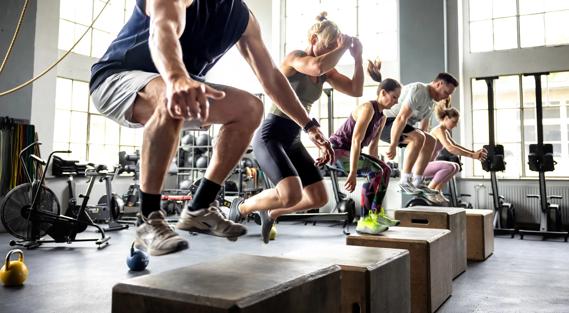
Plyometric training uses explosive movements to improve speed, power and agility
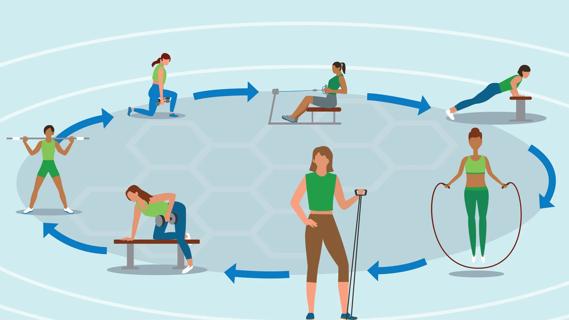
Circuit training combines strength and cardio exercises into one efficient workout

One helps with quick, intense bursts, while the other helps carry you for the long haul
It depends on your symptoms and where you feel them in your body, but you may want to sit this one out
This 75-day challenge provides a balanced approach to physical fitness, mental health and healthy habits

Managing your weight through physical activity may lower your chances of getting this common cancer

It typically starts in October and winds down in early spring, with cases at their highest in the middle of winter

Anxiety disorders, health conditions and past trauma can make driving nerve-wracking — help is available
 Search










