Locations:





These bright berries are packed with nutrients and antioxidants that may support your eyes, immune system and overall well-being
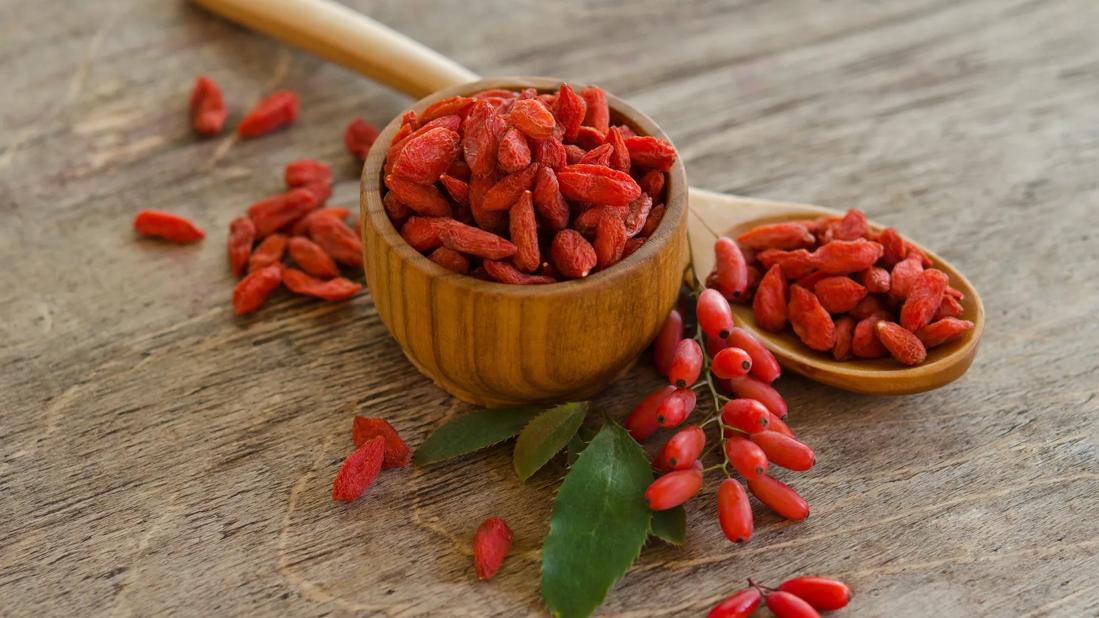
Image content: This image is available to view online.
View image online (https://assets.clevelandclinic.org/transform/dca1871d-d832-4bdd-bd14-00e7a7d905be/goji-berries-plant-fruit-585317932)
Dried and fresh goji berries in wooden bowl and spoon
Goji berries may be small, but they’ve earned a big reputation. For centuries, they’ve been used in traditional Chinese medicine (TCM). Today, you may find them dried in your trail mix or blended in your smoothie.
Advertisement
Cleveland Clinic is a non-profit academic medical center. Advertising on our site helps support our mission. We do not endorse non-Cleveland Clinic products or services. Policy
While no single food is a cure-all, goji berries offer an impressive mix of vitamins, minerals and plant compounds that can support your health as part of a balanced diet.
“There’s a reason goji berries are often called ‘superfoods,’” says registered dietitian Michelle Dodd, RD, LD. “They pack a lot of punch in a small package.”
Goji berries are the bright orange-red fruit of the Lycium barbarum plant, a shrub that’s native to Asia. Also known as wolfberries, they have a slightly sweet, tangy flavor that some people compare to a cross between a cranberry and a cherry.
Fresh goji berries can be tough to find in the United States, but dried varieties are widely available.
In one ounce of dried goji berries (about five tablespoons), you’ll get an excellent helping of nutrients that support your overall health. Among the highlights:
Goji berries are also considered a good source of:
While scientists continue studying exactly how these berries affect long-term health, their nutritional profile makes them a healthy addition to your plate.
“A healthy diet is all about variety,” Dodd says. “And goji berries can be a flavorful and nutrient-dense addition to a healthy eating pattern.”
Advertisement
She walks us through a few of the ways that goji berries help support your well-being.
One of goji berries’ standout nutrients is zeaxanthin, a carotenoid that helps protect your retinas — the light-sensitive tissue at the back of your eyes.
Research suggests eating foods high in zeaxanthin may help support healthy vision as you age. Some studies have found goji berries may also help protect your macula, the part of your eye responsible for sharp central vision.
“More research is needed to fully understand goji berries’ long-term benefits for eye health,” Dodd notes. “But from what we do know, there’s reason to expect that they support your vision.”
A healthy immune system relies on a variety of nutrients, and goji berries provide several of them.
They’re a good source of vitamin C and zinc, both of which play important roles in helping your immune system function properly.
Research has also looked at unique compounds in goji berries called polysaccharides, which may help support immune function. While those findings are promising, researchers are still learning how those effects translate to everyday health.
Some early research suggests goji berries may do more than nourish your body.
In one small study, people who drank goji berry juice for a short time reported improvements in overall well-being, energy and mood. Researchers also noted improvements in certain measures of mental performance. But because these studies were small and often looked at juice rather than whole or dried berries, more research is needed before drawing firm conclusions.
“We know that eating well can help your brain function at its best,” Dodd acknowledges. “We can’t say that eating goji berries is the key to better mental well-being, but a healthy diet with plenty of fruits and vegetables can absolutely make a big difference.”
Goji berries are rich in antioxidants. Those are compounds that help protect your cells from damage caused by unstable molecules called free radicals.
Over time, damage from free radicals can cause oxidative stress and contribute to aging and chronic disease. Antioxidants found in foods like goji berries and others can help fight that damage.
“No single food can prevent disease on its own,” Dodd reiterates. “Eating a variety of colorful fruits and vegetables is one of the best ways to get the antioxidants your body needs.”
Goji berries are easy to swap into some of your favorite recipes. Because they’re usually sold dried, you can use them much like raisins or dried cranberries.
Advertisement
Try adding them to:
You can also soak dried goji berries in warm water for a few minutes to soften them before eating on their own.
While goji berries can be a nutritious addition to your diet, they aren’t a replacement for other fruits and vegetables. Think of them as another colorful option to add variety to your plate.
Advertisement

Sign up for our Health Essentials emails for expert guidance on nutrition, fitness, sleep, skin care and more.
Learn more about our editorial process.
Advertisement
This East Asian and subtropical fruit is packed with delicious nutrition

Lean meats, fish, dairy and plant proteins can help you meet your protein needs without piling on saturated fat and sugar
This citrus fruit delivers vitamin C, fiber and other nutrients that can support your heart, immune system and skin

Protein is essential in your diet, but piling more onto your plate isn’t always better

Both are healthy choices, but wild-caught salmon offers a few more benefits

This vibrant purple yam offers vitamin C, fiber and antioxidants in every bite

The general rule is 1.2 to 1.6 grams of protein per kilogram of body weight — but that may not be exactly right for you

It’s a good on-the-go option and can help build muscle and aid in weight loss

Managing your weight through physical activity may lower your chances of getting this common cancer

It typically starts in October and winds down in early spring, with cases at their highest in the middle of winter

Anxiety disorders, health conditions and past trauma can make driving nerve-wracking — help is available
 Search










