Locations:





Despite their name, these patches don’t contain GLP-1 medication and have dubious effects
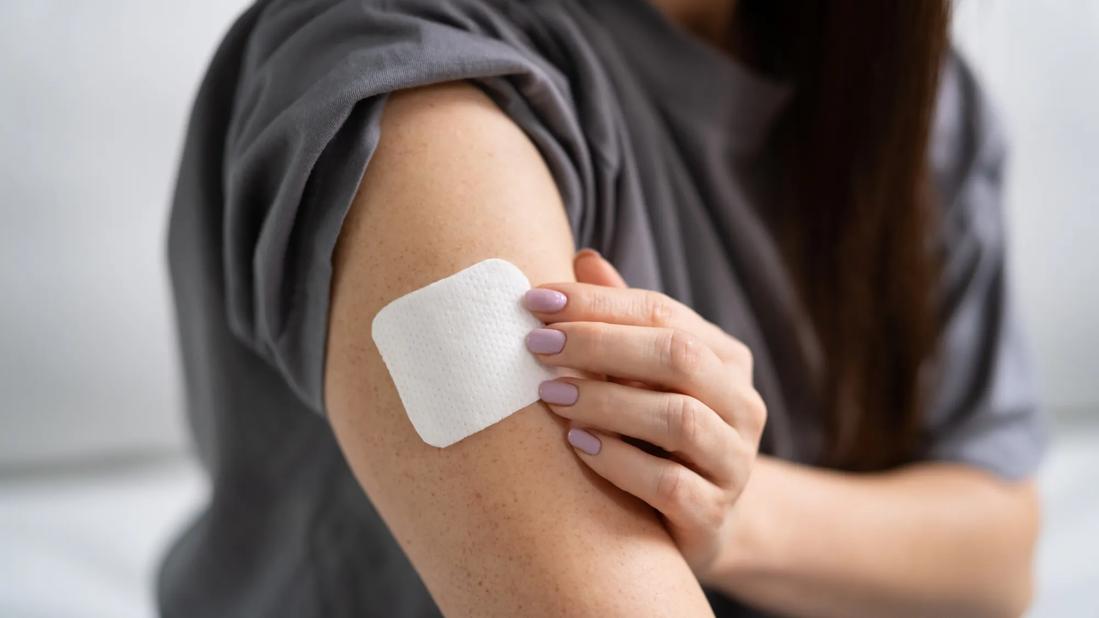
Image content: This image is available to view online.
View image online (https://assets.clevelandclinic.org/transform/5ff4769b-9ee0-4fb1-a27e-4abf9b458cb1/GLP1-arm-patch-1429256255)
Person applying a health patch to their arm
Weight loss ads are hard to miss these days, especially if you’ve searched for GLP-1 medications, like Ozempic® or Wegovy®. So, when a GLP-1 patch ad starts following you around the internet promising quick weight loss without shots or a prescription, it can sound pretty appealing.
Advertisement
Cleveland Clinic is a non-profit academic medical center. Advertising on our site helps support our mission. We do not endorse non-Cleveland Clinic products or services. Policy
But there’s a major problem: These patches don’t actually contain GLP-1 medication.
Endocrinologist Keren Zhou, MD, explains why GLP-1 patches aren’t a substitute for prescription weight loss medications and why they may be risky.
A GLP-1 skin patch is a nonprescription product sold online as a weight loss aid. Manufacturers often market these patches as alternatives to GLP-1 medications like semaglutide, claiming they’ll help curb your appetite and support weight loss.
But despite convincing marketing, these patches aren’t delivering GLP-1 hormones.
“GLP-1 hormones are large molecules that can’t easily pass through your skin,” explains Dr. Zhou. “That’s why the prescription medications currently only come as injections or pills. GLP-1 skin patches just aren’t scientifically possible yet.”
Due to backlash on this false advertising, some sellers have rebranded them as berberine patches. That’s a plant compound that’s the main ingredient listed in many of the patches.
But because the patches aren’t U.S. Food and Drug Administration (FDA)-approved, there’s no reliable way of knowing what’s actually in them.
Some GLP-1 patch products claim to have ingredients like:
Advertisement
“Even if the ingredients are listed, there’s no way of knowing if they’re in the product — or how much of an ingredient they contain — due to a lack of regulation,” states Dr. Zhou.
Despite the “results” you may see on social media, GLP-1/berberine patches likely don’t help you lose weight.
Some studies show that oral berberine supplements may lead to modest weight loss, Dr. Zhou notes. But that’s very different from applying berberine to your skin.
“There’s no scientific evidence that your body can effectively absorb berberine through your skin,” she says.
So, even if a patch contains berberine, there’s no proof it could get into your bloodstream in a way that would affect your weight.
Due to a lack of regulation and studies, it’s hard to know what risks GLP-1 patches pose.
One concern is adulteration, which happens when manufacturers add unlisted ingredients or remove listed ones so the product is cheaper to make.
“Some of these unlabeled ingredients may cause serious adverse effects,” Dr. Zhou emphasizes. “You could also develop an allergic reaction from the patch itself, a condition known as contact dermatitis.”
If you’re looking for a weight loss solution, it’s better to talk with a healthcare provider than to turn to social media trends.
Several FDA-approved medications are available and have been studied for safety and effectiveness, including:
Future innovations may be on the horizon. Researchers are looking into other ways to deliver the GLP-1 hormone, Dr. Zhou says, including using implantable pumps.
And a patch might be coming down the pike after all.
“One study from 2025 looked at a way to deliver liraglutide through the skin with the help of nanoparticles,” she adds. “But it’s in very early research trials.”
Not everything on social media is real. If a product sounds like a shortcut to a prescription medication, it’s worth investigating further before adding it to your cart.
For now, GLP-1 patches appear to be more marketing than medicine.
“If you’re interested in weight loss treatment, a healthcare provider can go over safe and effective options,” says Dr. Zhou.
Advertisement

Sign up for our Health Essentials emails for expert guidance on nutrition, fitness, sleep, skin care and more.
Learn more about our editorial process.
Advertisement
Abruptly ending treatment often comes with weight regain and other issues

Rapid weight loss can cause loose skin, facial volume loss and body contour changes

Eat smaller meals, stay hydrated, avoid high-fat foods and, if needed, ask your doctor about switching to a lower dosage
Taking a smaller dose than what your doctor recommends isn’t a good idea

Both are GLP-1 medications that are FDA-approved for Type 2 diabetes and weight loss, but how they work differs

Healthy eating helps, but so do a lot of other strategies for improving your overall health and wellness

Exercising while taking semaglutide and other GLP-1s helps prevent muscle loss and boosts metabolism
Semaglutide and other GLP-1s work best as long-term medications
Eyes typically increase to full size during two growth spurts in childhood
To start, opt for calorie-dense foods that are rich in protein and healthy fats
Pre-birth injections and monoclonal antibodies can help prevent serious complications
 Search










