Locations:





This 75-day challenge provides a balanced approach to physical fitness, mental health and healthy habits
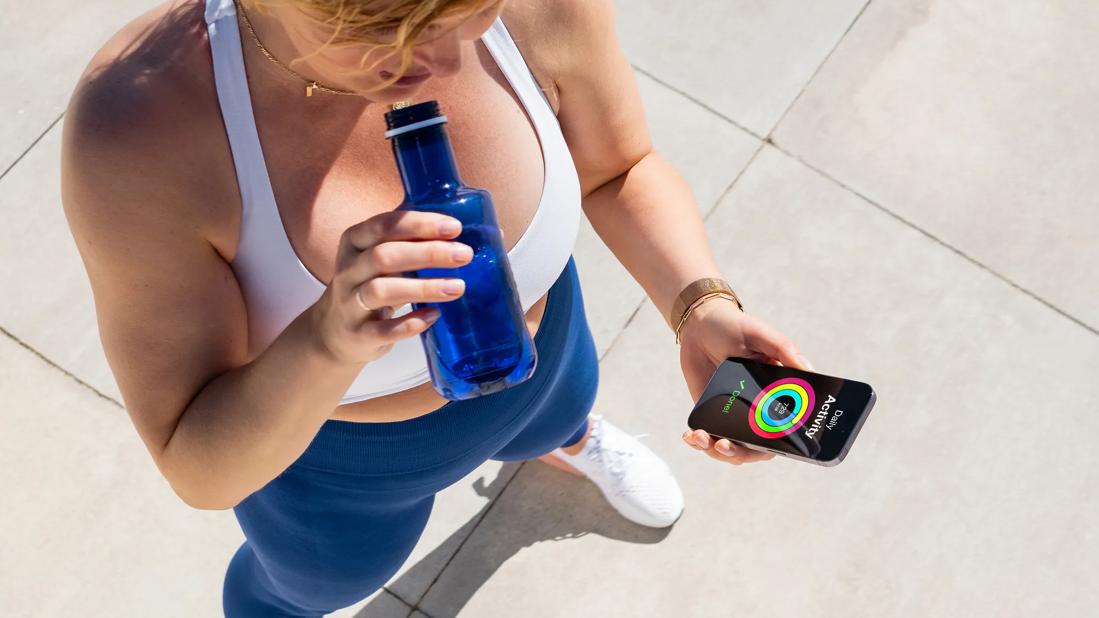
Image content: This image is available to view online.
View image online (https://assets.clevelandclinic.org/transform/48fe6176-ca18-496a-a736-497b44ceceeb/person-tracking-exercise-drnk-water-1485744579)
Person drinking from water bottle in fitness clothing, checking their activity on smartphone app
If the 75 Hard Challenge is too intense and the 75 Soft seems too forgiving, there’s now a middle-ground option trending on social media.
Advertisement
Cleveland Clinic is a non-profit academic medical center. Advertising on our site helps support our mission. We do not endorse non-Cleveland Clinic products or services. Policy
“75 Medium is designed to be accessible,” says sports medicine physician Michael Dakkak, DO. “It focuses on many of the same principles as 75 Hard and 75 Soft, but it’s achievable for the average person.”
Dr. Dakkak explains how it works and why it may be right for you.
The 75 Medium Challenge is a 75-day self-improvement lifestyle program designed to help you build healthier habits through consistent exercise, nutrition and personal development.
Unlike the 75 Hard Challenge — which requires you to follow a list of strict, non-negotiable rules — 75 Medium allows for some planned flexibility. The idea is to encourage consistency without demanding perfection.
“It helps to be flexible and forgiving when you’re trying to make significant lifestyle changes,” reiterates Dr. Dakkak. “You can get really consistent, achievable results without having to feel restricted. For a lot of people, that’s what makes this challenge more reasonable.”
There isn’t one official version of the 75 Medium Challenge, so exact rules can vary. But most versions follow a similar framework built around making positive improvements to your physical, mental and emotional health.
Here are some common 75 Medium Challenge rules to consider.
Advertisement
Most versions of 75 Medium call for one daily workout that lasts 45 to 60 minutes. That’s a notable difference from 75 Hard, which requires two 45-minute workouts every day, one of which needs to be outdoors.
“Daily movement is a cornerstone of these challenges,” says Dr. Dakkak. “But there’s generally more flexibility around how and where you exercise with 75 Medium.”
What you do for physical activity is also entirely up to you. You can go for a walk. Swim. Bike. Take a hike through the woods. The key is just to be consistent with physical fitness.
“You can build yourself up to 45 minutes by starting out with a daily stretch routine or just 15 minutes of exercise,” he suggests. “If your goal is to make healthy improvements over the course of 75 days, it’s safest to start with what you know you can do and build yourself up from there.”
Most 75 Medium plans encourage balanced eating while limiting:
Unlike the 75 Hard Challenge, 75 Medium allows for the occasional indulgence — a steak to celebrate important milestones, a piece of your favorite pie after a tough day.
“If you’re following your plan 90% of the time, it’s OK to look forward to a reward the other 10% of the time,” notes Dr. Dakkak. “When you build rewards into the 75 Medium Challenge, you don’t feel guilty about ‘failing,’ and you’re able to stay motivated for longer.”
The 75 Medium Challenge usually includes a daily hydration goal, though it’s much less rigid than 75 Hard’s one-gallon-a-day requirement. How much water you need varies, but the key is making sure you’re drinking water throughout the day.
“The goal isn’t simply to check this off your to-do list,” Dr. Dakkak points out. “It’s to build a habit of prioritizing healthy choices, like hydration, throughout the day.”
This challenge also encourages you to improve your mental and emotional health — because when these areas of your life decline, your physical health can also take a hit (and vice versa).
“When you’re in a better mental state — with less anxiety, less chaos and less unpredictability — you start to experience other improvements, too, like better sleep, faster recovery and more interest in doing the things you love,” Dr. Dakkak says.
Most 75 Medium Challenges include a daily personal-growth component and about 10 to 20 minutes of self-reflection and mindfulness. During this time, you can:
“Mental health affects everything you do and how you do it,” he emphasizes. “If you’re trying to build long-term healthy habits, strong mental health helps you get to the finish line.”
Advertisement
While 75 Hard requires daily progress photos, 75 Medium takes the pressure off by letting you decide how you want to track your successes.
“If you’re struggling with body image, it might be healthier to use habit trackers or journaling to document changes in how you feel versus how you look,” Dr. Dakkak recommends. “Progress photos are a tool, not a requirement.”
Some fitness trackers can do the work for you automatically, too. That way, you can pick and choose when it’s healthy or beneficial to look at all the progress you’re making.
The appeal of 75 Medium is that it balances structure with flexibility. That combination may benefit you by:
Like any fitness challenge, 75 Medium may bring some risks, such as:
Advertisement
“Programs like 75 Medium should improve your quality of life, not take it over,” says Dr. Dakkak.
If you experience pain or feel like something isn’t working, pause what you’re doing and make an appointment with a sports medicine specialist or physical therapist. They can help you figure out a way forward.
Interested in trying 75 Medium? Dr. Dakkak recommends taking a thoughtful approach with the following guidelines:
Advertisement
Healthy changes can last a lifetime, if you let them. And for many people, 75 Medium offers just that — an opportunity to create a healthier lifestyle that’s sustainable and encouraging.

Sign up for our Health Essentials emails for expert guidance on nutrition, fitness, sleep, skin care and more.
Learn more about our editorial process.
Advertisement
It helps to build up your strength and balance before tackling these more resistance-heavy TRX exercises
Glute bridges are simple bodyweight exercises worth adding to any workout

Stay afloat with bicycle kicks, alternating punches and water jogging
Plyometric training uses explosive movements to improve speed, power and agility
Circuit training combines strength and cardio exercises into one efficient workout

One helps with quick, intense bursts, while the other helps carry you for the long haul
It depends on your symptoms and where you feel them in your body, but you may want to sit this one out

Kettlebells are versatile, space-friendly weights that can help you build strength from head to toe

Managing your weight through physical activity may lower your chances of getting this common cancer

It typically starts in October and winds down in early spring, with cases at their highest in the middle of winter

Anxiety disorders, health conditions and past trauma can make driving nerve-wracking — help is available
 Search










