Locations:





 Search
This legume is a nutritional powerhouse
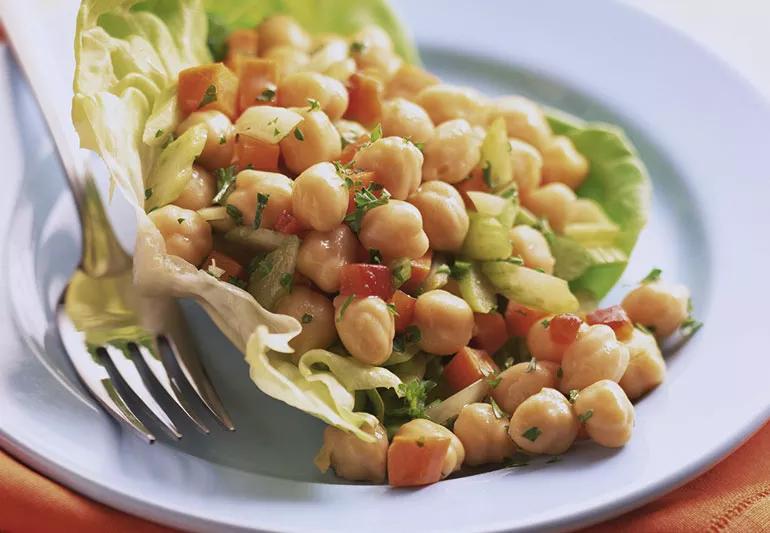
Image content: This image is available to view online.
View image online (https://assets.clevelandclinic.org/transform/3697400e-28b6-4f6b-b86e-6e6c8b6fead4/chickpeaSalad-86056750-770x533-1_jpg)
chickpeas in a salad
When versatile foods come up in conversation, chickpeas might not be the first thing that comes to mind. However, these plant-based foods pack a nutritional wallop — and can both add flavor to savory dishes and bulk up sweet treats. Dietitian Patricia Bridget Lane, RDN, LD/N, explains why chickpeas are so good for you — and the specific health benefits they provide.
Advertisement
Cleveland Clinic is a non-profit academic medical center. Advertising on our site helps support our mission. We do not endorse non-Cleveland Clinic products or services. Policy
Chickpeas, which are also known as the garbanzo bean, are classified as a legume. They come from a plant — in fact, Lane notes they’re one of the earliest cultivated vegetables in history — and grow two to three to a pod. However, chickpeas are considered to be both a vegetable and a protein because they’re so nutritious. Some people even consider them a superfood.
According to the U.S. Department of Agriculture’s FoodData Central, one cup of chickpeas has:
Chickpeas are what’s known as a complete protein because they contain all nine essential amino acids, which are building blocks that help our bodies function properly. “Chickpeas are also an excellent source of non-animal protein,” Lane adds. “They’re great for vegetarians and vegans.”
In addition, chickpeas are also brimming with vitamins and minerals. These include choline, which helps your brain and nervous system run smoothly, as well as folate, magnesium, potassium and iron. For good measure, chickpeas are also high in vitamin A, E and C. “That’s why they reap a ton of health benefits,” Lane says. “These little tiny peas are just packed with nutrition.”
Advertisement
Because chickpeas are so full of nutrients, they provide multiple health benefits, including:
Chickpeas are high in fiber. In fact, the one-cup serving represents “roughly about almost half of the recommended daily fiber intake for adults,” Lane says. This promotes satiety (in other words, it helps you feel full longer) so you don’t overeat. “This can help people lose weight if they’re trying to do so,” she adds, “or maintain their weight.”
Because chickpeas are so high in fiber, they also help prevent constipation — which has the added bonus of keeping your gastrointestinal (gut) health in tip-top shape.
Chickpeas are naturally very low in sodium and are cholesterol-free. They’re also a good source of polyunsaturated fats. Polyunsaturated fats especially help control (and reduce) your cholesterol levels which, in turn, decreases your risk of developing heart disease.
Chickpeas are low on the glycemic index, which means they’re a food that won’t make your blood sugar spike. “This is a great food to incorporate if someone has trouble regulating their blood sugar,” Lane says. “Or if someone has diabetes, they’re good to help control blood sugar.”
People living with celiac disease develop a sensitivity to gluten, which can make dietary choices difficult. Chickpeas, however, are a great option: They’re naturally gluten-free.
Unlike other foods, chickpeas offer health benefits no matter how you consume them because the nutrients in the legume always remain bioavailable, a term that means your body can reap positive benefits from them.
“You can eat chickpeas as natural as they come, right out of the can, or right out of the bag if you just want to boil them,” Lane says. “You can put them on a salad cold. You can muddle them into hummus. The way you eat them doesn’t really change their nutrient profile.”
The same flexibility holds true for chickpea pasta or chickpea flour. Both options are healthier than regular pasta made from white flour, and they provide health benefits every way you prepare them. “For instance, someone who likes pasta might switch to a garbanzo bean pasta to help control their blood sugar,” Lane suggests. “Someone who is using chickpea flour in a baking product might be doing so to accommodate a gluten-free preference for someone with celiac disease. They serve a health purpose.”
Lane does caution that you should always read the ingredient label, as prepackaged foods can include a lot of additives. “The more natural the hummus is, the better it’s going to be for our bodies,” she says. “I always say a rule of thumb is that if you can’t pronounce the ingredients, there’s probably a problem.”
Advertisement
Although hummus is simple to make — at its core, it contains chickpeas, olive oil and tahini (a paste made from sesame seeds) — some kinds might be flavored by other ingredients, such as chocolate. This can introduce additional ingredients and reduce its healthiness, Lane notes. “You might be like, ‘Oh, well, this is healthier than consuming ice cream, or getting chocolate mousse for a party’,” she says. “Which it could be — but we want to make sure that we’re reading the carb content and seeing if there’s any added sugar in the serving size. If there’s 10 grams of carbs, 8 grams of that should not be from added sugar. You want to aim for less than half of added sugar per total gram of carb count.”
Lane adds that in addition to looking out for carbohydrates and serving size, you should check how much fat is in a given chickpea-based food, especially the amount of saturated fat and trans fat. “Make sure there’s none of that in there, or very minimal amounts,” she advises.
Chickpeas are good as a base for savory foods and can be a substitute in sweet dishes as well. Healthy recipes that use chickpeas include:
Advertisement
Although chickpeas are high in vitamins and minerals, they do lack vitamin D. (You’ll find that in fortified milk or OJ, fatty fish, liver or egg yolks.) “Just because chickpeas are beneficial for us doesn’t mean that we should restrict ourselves from having other food groups as well,” Lane cautions. “For example, we need to pick up vitamin D elsewhere. It’s important to always have a well-rounded, balanced diet.”
Indeed, Lane says the recommended serving of one-and-a-half cups of legumes a week is plenty. “If someone is moving more towards a plant-based diet, they can substitute chickpeas as their protein for their meal. But you don’t want to overdo it. You don’t want to have cups and cups of chickpeas every day. Don’t forget moderation, and always keep variety in your diet.”
Advertisement

Sign up for our Health Essentials emails for expert guidance on nutrition, fitness, sleep, skin care and more.
Learn more about our editorial process.
Advertisement

This caffeinated South American tea contains antioxidants and other nutrients that may offer some health benefits
Protein is essential in your diet, but piling more onto your plate isn’t always better
Choosing snacks with protein can help curb hunger, support muscle health and keep your energy steady between meals
Fish packs plenty of protein, heart-healthy fats and other body-boosting nutrients into every bite
Both are healthy choices, but wild-caught salmon offers a few more benefits
These bright berries are packed with nutrients and antioxidants that may support your eyes, immune system and overall well-being
Prepping ingredients ahead of time, rethinking your snacks and making smart protein swaps can up your daily intake
It’s a good on-the-go option and can help build muscle and aid in weight loss

Most breast pain isn’t a sign of cancer, but certain symptoms deserve a closer look

It’s a myth that you should avoid sleep (or have someone wake up throughout the night) after a head injury

The color and shade of your urine offer a window to your health











